Spicy Corn and Ginger Soup with Chillies, Shallots and Home Made Chicken Stock.

Chicken Soup. Medicine for the soul. The ultimate comfort food and oh so very versatile. Here’s another of my family’s favourite soups. Spicy Corn and Ginger Soup with Chillies and Shallots. This soup is fresh, light and very moreish. Its also very quick and easy to make. While you could make this soup with pre-packaged chicken or vegetable stock, the addition of home made chicken stock elevates this simple soup into something truly special. I know. I’ve made it both ways and can definitely taste the difference.

I’m pretty sure this soup entered my repertoire as one of  Bill Granger’s recipes. It has been tweaked and altered over the years to  cater to my family’s particular tastes and idiosyncrasies  My husband and I used to eat a very similar version of this soup at his eponymous cafe Bills in Darlinghurst.  A very long time ago when there was only one Bills in Sydney. I am pleased to say the original cafe is still there on the very same corner in Liverpool St.  And I have to say it’s still as fabulous today as it was all that time ago. Hip and happening, yet almost timeless. A true Sydney stalwart.

Spicy Corn and Ginger Soup with Chillies, Shallots and Home Made Chicken Stock.

Serves 4 -6

2 tablespoons vegetable oil
1 spanish onion, finely diced
8 finely sliced green spring onions
1 long red chilli, finely sliced
1 garlic clove, minced or grated
2 tablespoons fresh ginger, minced or grated
4 corn cobs, shucked, kernels freshly cut from the cob
8 cups (2 litres) chicken stock or vegetable stock
4 tablespoons tamari soy sauce
2 tablespoons dry sherry
1/4 teaspoon white pepper
2 teaspoons sugar
sea salt flakes to taste
coriander leaves to serve

HEAT oil in a large (4 litre capacity) saucepan over medium heat.
ADD spanish onion and cook stirring occasionally for 5 minutes until soft and translucent.
ADD spring onions, chilli, garlic and ginger and cook for about 2 minutes until fragrant.
ADD corn kernels and continue to cook for 3 – 5 minutes, stirring well.
POUR in chicken stock and bring to a gentle simmer.
COMBINE soy sauce, sherry, sugar and white pepper in a cup and add to the soup.
SIMMER for a further 10 minutes. Check seasoning and add sea salt to taste if required.
LADLE into bowls and garnish with coriander.

Posted in Poultry, Soup, What I Love to Cook | Tagged , , , , , , , , , , | Comments Off on Spicy Corn and Ginger Soup with Chillies, Shallots and Home Made Chicken Stock.

A Silent Hero. Home Made Chicken Stock.

Last night we had soup for dinner. A Spicy Corn and Ginger Soup with Chillies, Spring Onions and Home-made Chicken Stock. It was healthy, nutritious and delicious. The silent hero of the dish was definitely the chicken stock. You can make this soup with purchased tetra packs of stock but if you would like to elevate the flavour to new heights use a home-made stock. It’s not too difficult. Just a little time-consuming. So… before I post the Spicy Corn and Ginger Soup recipe let’s have a conversation about home-made chicken stock.

A good chicken stock. The basis of so many delicious meals – soups, sauces, risotto, stir-fries, braises and casseroles. The list goes on. I always like to have home-made chicken soup on hand. On the stove, in the fridge or freezer. It’s my kitchen essential. Give me a great tasting chicken stock and I’ll have dinner on the table in the blink of an eye.

There’s no way around it. A good stock needs time and patience to develop great flavour. I simmer stock on the stove for a good three hours. So always schedule stock making for a morning or afternoon when I am home attending to a mountain of other chores.  The effort is well worth it. This is another recipe that virtually takes care of itself, simmering away on the stove after some careful preparation.

Here are some simple steps I like to follow to produce a wonderfully flavoursome, sparkling clear stock.

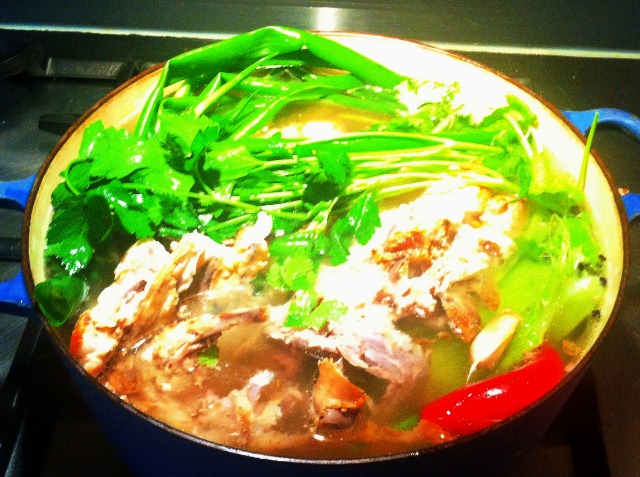
First and foremost, I like to freshly roast chicken carcasses before adding them to the stock pot. Roasting caramelizes and deepens the flavour of the chicken in the stock. I’m careful to transfer only the carcasses, leaving any fats and oils behind in the baking tray. I really don’t want to be skimming those off my finished stock.

Once the water, vegetables and aromatics are added to the stock pot, slow extraction, not evaporation is key. As it cooks the stock should barely simmer. This involves some careful adjustment of the heat to ensure the bubbles break the surface slowly, not rapidly. Once I have the simmer at this point, I leave the stock alone and resist the temptation to push the carcasses, vegetables and aromatics down into the simmering liquid. This will only result in a cloudy stock. Been there, done that! Be patient and let time work its magic.

Another little secret to  a clear stock?  In the early stages it is necessary to regularly skim the surface of the stock with a ladle to remove any impurities. I initially add only the roasted chicken carcasses to the stock pot. This way I can easily skim any scum off the top of the stock without it becoming trapped in the vegetables and aromatics. I add these only when the liquid reaches a bubble. This could take a good twenty minutes or more depending on the size of the stock pot. The addition of ginger also helps enormously with the clarity of the stock.

If I am going to use the stock in an Asian inspired dish I use long green spring onions instead of brown, and substitute chillies for the bay leaves and coriander for the parsley. In the chicken stock recipe below I have marked these as bracketed substitutions for the vegetables and aromatics.

Here’s the recipe. I hope you give it a try.

Home Made Chicken Stock

Makes 10 – 12 cups

2.5 kg meaty chicken carcasses

enough water to cover the carcasses, this will depend on size of the stock pot; approximately 4 litres (16 cups)

Vegetables
2 medium carrots, peeled, sliced into chunks
2 stalks celery, sliced into chunks
1 leek, white part only, rinsed well, sliced lengthwise into quarters,
1 large onion, halved and peeled  (or 8 long green spring onions, trimmed and cut in half lengthways)

Aromatics
2 cloves garlic, peeled and bruised
1 thumb sized piece of ginger, peeled and sliced thickly
8 Italian parsley (or coriander sprigs)
2 fresh bay leaves (or 2 whole red chillies)
12 peppercorns

sea salt flakes to taste

PREHEAT oven to 180 C and line a roasting tin with baking paper.
RINSE the chicken carcasses well, removing any clumps of fat. If the pieces are too large to fit comfortably in your stock pot, cut them to size with poultry shears.
PLACE them onto the baking tray and bake in hot oven for 30 minutes until golden brown.
TRANSFER the roasted chicken carcasses into a large stock pot with tongs. Add just enough cold water to cover them.
BRING the water to a bare simmer over moderately low heat.  Skim the surface with a ladle to remove any impurities.
AS THE stock begins to bubble, add the vegetables and aromatics.
ADJUST the heat to a gentle simmer, do not allow it to boil or the broth will be cloudy.
COOK gently without stirring for 2-3 hours. I like to use a diffuser or simmer mat. Chicken stock should have a full, rich, rounded flavour. Taste often, taking the pot off the heat when satisfied.
REMOVE from heat. Strain the stock through a fine sieve and discard the solids.
SEASON to taste with sea salt.
ALLOW to cool completely. Store, covered in the refrigerator for up to three days or in the freezer for 2-3 months.

Posted in Poultry, Soup, What I Love to Cook | Tagged , , , , , , , | 2 Comments

Slow Roasted Beef Short Ribs with Orange, Star Anise and Cinnamon. Chinese Style

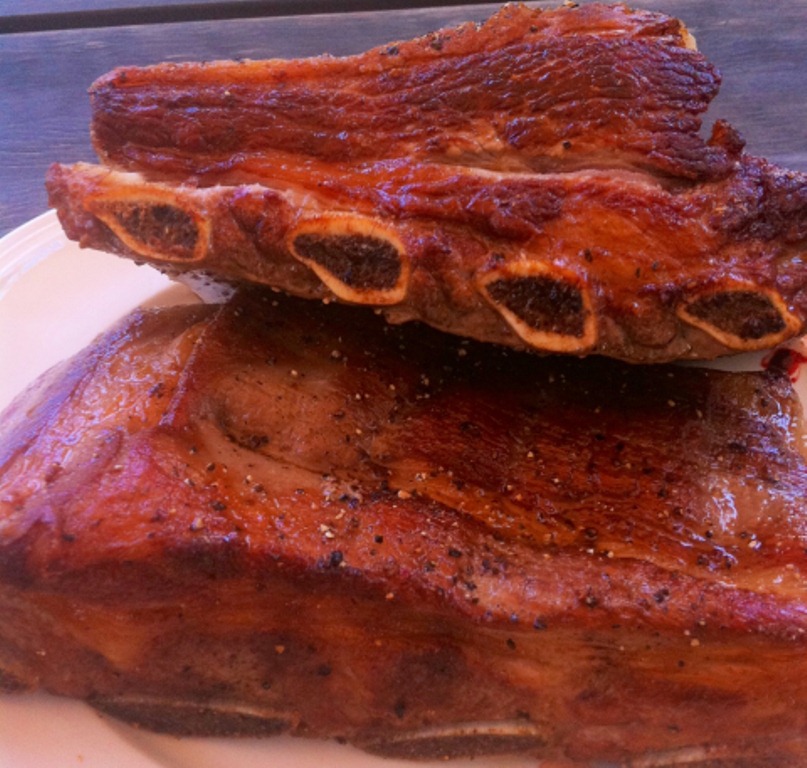
I think of Slow Roasted Beef Ribs and two words spring to mind. Rich and unctuous. This is a gorgeous dish. Meltingly rich, flavoursome beef perfumed with orange, cinnamon and star anise.

And so easy to prepare. Sear the ribs and simply slow roast in the oven for two and a half hours. Another perfect set and forget dinner, that requires maybe twenty minutes preparation effort in the kitchen. Prepare the sauce as you cook the rice and steam the greens.

Beef short ribs are available at any good butcher. A cheaper cut of meat, they require long, slow cooking. I find this much easier to do in the oven than on the stove top. I would never leave a pot unattended on the stove but am quite happy to go about my busy schedule knowing dinner is slowly roasting away in the oven.

My preference is to buy the short ribs in 2 racks weighing just over a kilo each. Once cooked the meat will be almost falling off the slab like bones. I find the presentation of the ribs is nicer carving from the rack into individual portions. Most butchers sell short ribs already cut into smaller portions so you may have to ask them for a larger piece. Using smaller cuts of short ribs is no problem. The end result is just as tender and delicious, it’s just likely that the meat will fall well away from the bone as it roasts.

Here are the short rib racks after a ten minute searing.

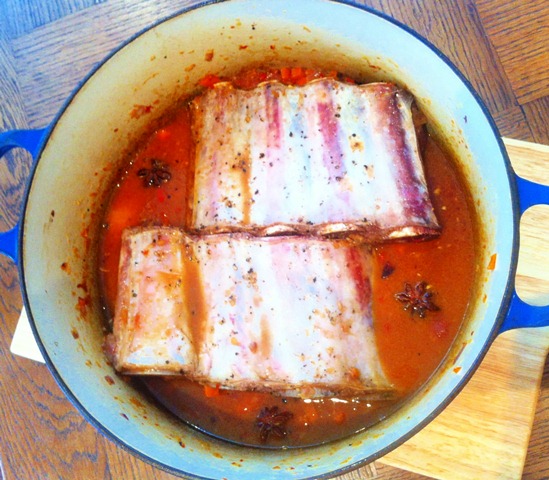
With the braising ingredients added to the pot.

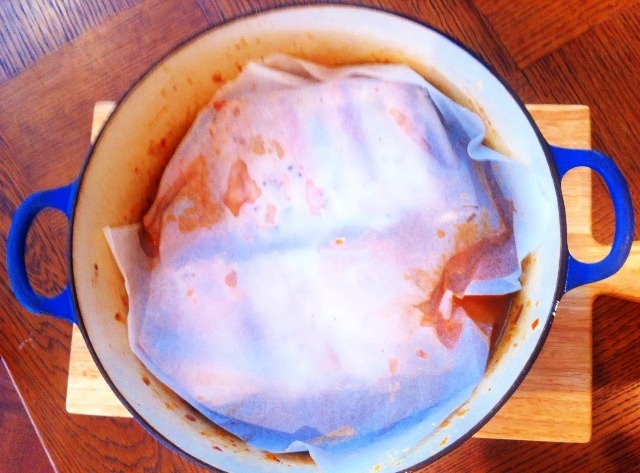
And lastly, here’s the pot, with baking paper sealing in the liquids, ready for a long, slow roast in the oven.

As the short ribs roast the house will be filled with a heady aroma of orange, cinnamon and star anise. How irresistible is that?

Slow Roasted Beef Short Ribs with Orange, Star Anise and Cinnamon
Serves 6

2.5 kg bone-in beef short ribs
freshly ground black pepper
2 tablespoons vegetable or olive oil
1 red onion, finely diced
2 medium carrots, peeled and diced
6 cloves garlic, minced
2 tablespoons fresh minced ginger
2 long red chillies, finely sliced
1/2 cup fresh orange juice
Strips of orange zest
1/4 cup soy sauce
2 cups water
1 tablespoon rice vinegar
1/4 cup hoi sin sauce
1 tablespoon dark brown sugar
1 cinnamon quill
5 whole star anise

Steamed rice and greens to serve
Sliced chillies and picked coriander leaves to garnish

PREHEAT oven to 170 C.
TRIM any excess fat from short ribs. Season generously with black pepper.
HEAT a heavy based pot ( Le Creuset or similar) over medium-high flame.
ADD oil and brown short ribs on all three meaty sides [but not on bone side] for about 10 minutes. Do this in 2 batches to avoid overcrowding the pot. Transfer the ribs to a plate.
DRAIN any excess fat from the pot. Reduce heat to medium.
ADD onions, carrots, garlic, chilli and ginger to pot. Cook for about 5 minutes until vegetables are soft and translucent, and spices fragrant.
ADD orange zest and juice, soy sauce, water, rice wine vinegar, hoi sin sauce and brown sugar to the pan. Stir well to combine. Bring to a simmer.
RETURN short ribs to the arranging in a single layer, meaty side down. The braising liquid won’t completely cover the ribs.
ADD star anise and the cinnamon quill submerging them in the braising liquids.
PLACE parchment paper over the ribs and braising mixture.
COVER the pot with a lid and place in oven, middle rack position. SLOW ROAST until ribs are tender, about 2-1/4 to 2-1/2 hours, turning ribs once about halfway through cooking.
REMOVE pot from oven and transfer ribs to platter and cover with foil to keep warm.
MAKE the sauce. Strain braising liquids, pressing with a spoon to extract as much of the liquids as possible. Spoon off any surface fat. RETURN liquids to the pot and simmer over medium heat for 5 minutes or until reduced by half.
CARVE beef ribs into serving sized portions. Drizzle generously with sauce. Garnish with sliced red chilli and coriander leaves.
SERVE with steamed rice and greens, with any extra sauce in a jug on the side.

Posted in Beef, What I Love to Cook | Tagged , , , , , , , , , , , | 2 Comments

Hermann Loves Coconut. Mango and Banana Muffins. Raspberry and Apple Cake.

It has been a very warm week and Hermann has been so very active breaking free from his bowl on the kitchen bench every other day. I’d almost started to think of him as a recalcitrant child.

On Sunday I decided that even though I was only in Day 8 of the 10 day feeding and breeding cycle, I was going to break the rules. Divide the dough into four portions and bake two that very day. I have saved one to bequeath to Amanda tomorrow and am considering banishing the fourth Hermann to Siberia. The freezer that is. I figure that after all those holidays in a hot climate, the oven, he might appreciate a change of scenery.

In the short time that I have known him Hermann seems quite resilient. I’ve seen the dire warnings not to put him in the refrigerator or he will die, but am supremely confident of my ability to resurrect him from the dead with a gentle thawing, a good feeding of flour and sugar and a warm glass of milk. Or if all else fails start a new Hermann from scratch.

Since acquiring my Hermann I have discovered that he is so very popular he has his own website. You can check it out at www.hermanthegermanfriendshipcake.com. Browsing through this rather large and enthusiastic website I came across this: Start your own Herman. So simple a child can do it!  For anyone who wants to take up the challenge I’ve adapted the recipe, using Australian metric conversions. Just scroll down to the very end of the post.

As many of you know, Sunday afternoon means baking in my house. For school lunches and the boys in my son’s dorms. Those boys form a very useful test kitchen. Last week I sent in my very first Herman studded with dried cherries and almonds. He received very favourable reviews.  This week I wanted to experiment with fresh fruit and coconut. Two portions of Hermann starter yielded a lot of baking. Eighteen Mango and Banana Muffins with Coconut and one very large Apple and Raspberry Cake with Coconut. To be honest the fresh fruit and coconut lifted this cake to an entirely new level of deliciousness. My favourite combinations so far.

Christmas is only six or so weeks away so sadly these will be my last Hermanns for a while as I turn my attention to festive Christmas baking. I’m thinking gingerbread houses, puddings and mince pies.

Hermann Mango and Banana Muffins with Coconut
Makes 18 muffins

1 ripe banana, mashed
1 lemon, zest finely grated and juiced
2 ripe mangoes, peeled and diced
1 1/2 cups shredded coconut

1 quantity Hermann starter, see note below
1 cup sugar
½ tsp salt
2 cups self raising flour
2/3 cup vegetable oil
2 eggs
2 tsp vanilla essence

1/4 cup melted butter
1/4 cup brown sugar

PREHEAT oven to 180 C.
LINE muffin tins with paper cases.
COMBINE banana, mango, coconut, lemon zest and juice in a large mixing bowl.
ADD starter, eggs, sugar, salt, flour, vegetable oil and vanilla.
BEAT well with a wooden spoon.
POUR batter into prepared muffin tin.
BRUSH muffins with melted butter and finish with a sprinkle of brown sugar.
BAKE in 180 C oven, centre rack position, for 15 – 20 minutes until brown.


Hermann Cake with Apple, Raspberry and Shredded Coconut

1 quantity Hermann starter, see note below
1 cup sugar
½ tsp salt
2 cups self raising flour
2/3 cup cooking oil
2 eggs
2 tsp vanilla essence
2 cooking apples cut into chunks
1 cup frozen raspberries, partially thawed
1 cup shredded coconut
1 heaped teaspoon mixed spice

1/4 cup melted butter
1/4 cup brown sugar

PREHEAT oven to 18O C
COMBINE all ingredients in a large bowl. Beat well with a wooden spoon.
POUR batter into a large baking tin.
BRUSH top of cake with melted butter and sprinkle brown sugar on top
BAKE in 180 C oven, centre rack position for 45 minutes until golden.
WHEN cold, dust with icing sugar and cut into fingers or squares.

Make Your Own Hermann Starter Dough

Just one important detail to note. This process needs to be started 10 days before you would like to bake a cake. On day 10 the starter dough is divided into four portions. Traditionally one to bake, one to keep and two to give away. Hence the moniker Hermann the German Friendship Cake.

7 g active dry yeast, 1 sachet or 2 teaspoons loose yeast granules
1 cup plain flour
1 cup castor sugar
1 cup warm milk
1/4 cup warm water

Dissolve the yeast in warm water for 10 minutes then stir.
Add the flour and sugar then mix thoroughly.
Slowly stir in the warm milk.
Cover the bowl in a clean cloth.
Leave in a cool dry place for 24 hours
Now proceed from day one of the 10 day cycle, as described in my earlier post From Daylesford With Love. Hermann the German Friendship Cake.

Posted in Baked, Sweet Treats, What I Love to Cook | Tagged , , , , , , , , , | 3 Comments

Russell’s Little Secret. Stone Pizza. With Ham, Sopressa, Capsicum, Confit Garlic, Basil and Mozzarella

Here is a pizza that I rustled up last night. Home-made pizza dough. Baked on a pizza stone. With ham, sopressa capsicum, confit garlic, basil and mozzarella. A tribute to the very resourceful Russell. Excuse the pun.

Here is Russell’s beautiful wood-fired pizza oven. In the garden surrounded by lavender and rosemary bushes.

I was so looking forward to my visit to Wattleflat, and dreaming of the wonderful, wood-fired pizzas we were going to bake. In that very oven. I even made up a batch of confit garlic to bring with me as a token of gratitude. Alas, the weather and the baggage handlers at Sydney Airport conspired against us.

Temperatures dropped to an unseasonable 7 C . The cold and accompanying rain were certainly not conducive to an evening in the garden assembling and baking pizza. And my jar of Confit Garlic? Smashed by the baggage handler as my hand luggage passed through security screening at Sydney Airport. Fortunately, I had double bagged  it. Unfortunately, I was blissfully ignorant of the fate of that jar until a faint garlic odour permeated the cabin mid flight. Apologies to any fellow Qantas travellers who may have noticed and wondered exactly what that funny smell in the cabin might have been.

We still baked pizza that weekend. Sans the Confit Garlic and under cover of the eaves of the verandah on pizza stones on the gas fired barbecue. And here is Russell’s barbecue.
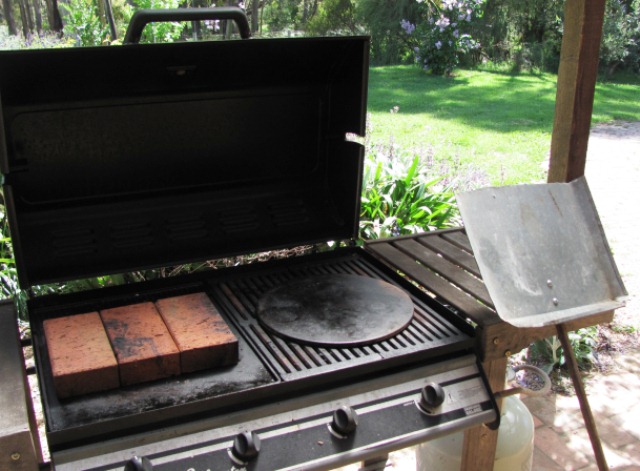
There are one or two things worth noting in this picture. On the griddle there is a conventional round pizza stone. But have a close look at the hotplate. Those terracotta paving bricks, straight out of the garden, are Russell’s preferred pizza stones. They make wonderful pizza. Almost as good as those that  I would imagine the wood fired pizza oven produces.

Russell’s resourcefulness, however, doesn’t stop at those paving bricks. Take a close look at the pizza paddle. I am reliably told that Russell baulked at the $70 price tag attached to the more conventional pizza paddle available at the local hardware store. So he came home, rummaged around in his man shed and fashioned his very own pizza paddle out of a piece of old tin and a discarded broom handle. That kind of ingenuity deserves to be applauded.

So here’s my take on pizza. Russell style. Made with home-made pizza dough and sauce. And confit garlic of course!

PIZZA DOUGH

You will need to start making the dough at least 2 hours before you need it. You can make it the day before or even earlier if you like.

Makes 8 medium or 6 large pizza bases

1kg  Tipo ‘00’ flour
1 level tablespoon fine sea salt
4 ½  teaspoons dried yeast
1 tablespoon sugar
4 tablespoons extra virgin olive oil
650ml lukewarm water
½ cup finely ground semolina flour, for kneading

COMBINE flour and salt in a large mixing bowl

IN A SEPARATE bowl combine the yeast, sugar, olive oil and lukewarm water.  Leave to stand  for a few minutes to activate the yeast.  When the yeast is activated the mixture will begin to froth. A useful rule of thumb for tepid water is one part freshly boiled water to two parts cold, i.e.  use 220 ml boiling water to 430ml cold.

ADD wet ingredients to dry and mix to a soft dough.

DUST a work bench with semolina flour. Turn the dough out onto the bench and knead for 5-10 minutes or until the dough is smooth and springy. Use the heel of your hand to push and stretch the dough. Lift and fold it towards you, making a quarter turn. Continue kneading, turning the dough a quarter turn each time, for 10 minutes or until the dough is smooth. For good measure I like to intermittently throw the dough against the bench top as I am kneading it to further develop the gluten.

PLACE the ball of dough into a clean oiled bowl and cover with a tea towel. Leave it in a warm place to rest and relax for about an hour or until it has nearly doubled in size.

WHEN the dough has risen, punch the dough with your hands to knock the air out of the dough. Lightly knead for a minute or two on a bench top that has been freshly dusted with semolina flour.

DIVIDE the dough up into as many little balls as you want to make pizzas – this amount of dough is enough to make six large or eight medium pizzas. Give each ball of dough a quick knead and let them rest for about 15 minutes.

These are your pizza bases, ready to be cooked or frozen in zip lock bags for future use.

STRETCHING THE PIZZA DOUGH

Dust each ball of pizza dough lightly with flour. Pat into a disc and flatten with the heel of your hand.

By hand continue to gently stretch the dough into a 10cm or 12cm round. Working from the centre of the disc, press the dough outwards from the centre. Rotate the dough to form an even circle.

Using a rolling pin, roll the circle of dough to desired size and thickness.

If you are making large quantities of pizza you can pre stretch the pizza dough. Make your dough and roll your pizzas bases out well in advance. Stack them on a tray or a plate, one on top of the other, pancake style, with baking paper between each layer. Seal them with cling wrap and refrigerate. Remove from the refrigerator 20 minutes before use.

USING A PIZZA STONE ON YOUR BBQ

You will need:

BBQ with a Hood,
Pizza Stone or unglazed terracotta, granite or quarry tile,  and
Flat plate and long handled spatula (or pizza paddle if you have one) on which to assemble the pizza and use to transfer the pizza to and from the stone.

POSITION the cold pizza stones or unglazed tiles on the BBQ plate.

PRE-HEAT the BBQ with all burners on high until the temperature reaches 200 C to 250 C degrees. This will take about 30 minutes.

DUST the preheated pizza stones with a little flour or semolina.

PLACE your home made rolled or stretched pizza base onto a floured flat plate or pizza paddle.

ADD toppings.

WHEN you are ready to cook the pizzas adjust the centre burners to low, i.e.  the burners are directly under the hot plate to avoid high, direct heat under the pizza stones.

TRANSFER the pizza from plate (or paddle) to the hot stone with a quick jerking action. Do not touch the stone with your hands. It is extremely hot and you will burn yourself.

CLOSE the lid of the BBQ and cook the pizzas, until crust is golden brown  and topping hot and bubbly. Home-made pizza dough will cook in 10 – 15 minutes with the lid down.

REMOVE the cooked pizza from the stone with a paddle or long handled spatula. Leave the stone in the BBQ and do not attempt to remove until it is completely cold.

Stone Pizza With Ham, Sopressa, Capsicum, Confit Garlic, Basil and Mozzarella

1 large pizza base, stretched and rolled
4 tablespoons tomato sauce, recipe follows
2 tablespoons garlic confit
3  thinly sliced double- smoked ham, torn
6  thinly sliced Sopressa (Italian salami), torn
6 basil leaves, torn
1/4 red capsicum (pepper) thinly sliced
75 gm fresh mozzarella cheese, shredded or torn into pieces
semolina, for dusting.

HALF AN HOUR before baking place the cold pizza stone or tile in the oven or BBQ and preheat to a minimum 200 C, preferably 250 C, as per detailed instructions above.

MAKE the tomato sauce

1 tablespoon olive oil
1/2 small onion, finely diced
1/2 small garlic clove, minced
1 400 gm can of crushed tomatoes
sea salt and pepper
HEAT the olive oil in a heavy based saucepan over medium heat. Add onion and garlic and a generous pinch of salt. Cook for 3-5 minutes until onion is translucent.
ADD tomatoes. Reduce heat to low and simmer gently for 15 – 20 minutes until tomato mixture is reduced by half.

Assemble the pizza
LIGHTLY dust work surface or plate with semolina.
SPREAD tomato sauce and mashed confit garlic cloves all over the prepared pizza base.
SCATTER with ham, sopressa, capsicum, basil and mozzarella.

Bake the pizza
PLACE on preheated pizza stone.
BAKE for 10-15 minutes until base is golden and crisp.
SERVE cut into wedges.


Posted in Pizza, What I Love to Cook | Tagged , , , , , , , , , , | 7 Comments

Pork, Prawn and Shiitake Mushroom San Choi Bau with Roasted Peanuts

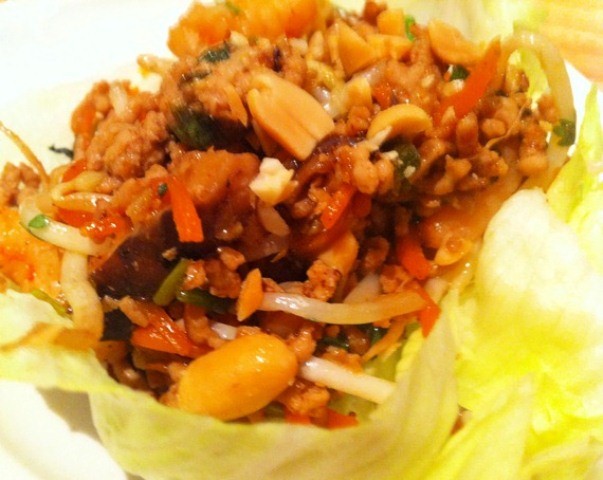
I had forgotten about this little gem of a recipe, until reminded by my daughters last week. Chinese Pork, Prawn and Shiitake Mushroom San Choi Bau.  Served in lettuce cups with a sprinkling of  chopped roasted peanuts for crunch.

I used to make this all the time when my children were younger. It’s truly fabulous. For many years it was a firm, family favourite. Quick and easy. Delicious and very nutritious. Perfect for dinner on a hot summer evening. Eaten outside on the deck, even better. No mess, no drama.

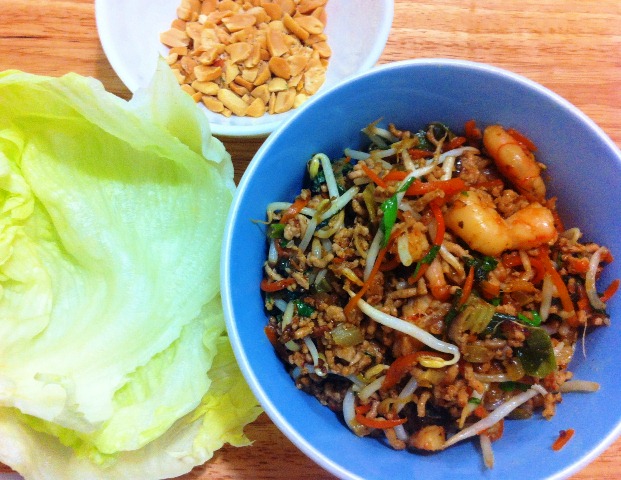
After a quick stir fry in the wok, I would pile the pork, prawn and shiitake mushroom mixture into individual little bowls, ready to be spooned into lettuce cups; crisp iceberg or soft butter leaf. My little darlings felt so important assembling their own dinner. There was a certain method in my madness. It kept them entertained. With individual servings there was no bickering over double dipping of spoons. Or worse finger pointing amongst greedy siblings as to who had indulged in more than their fair share. I think you get the picture.

My children are older and wiser now and still love San Choi Bau. The more things change, however, the more they stay the same. Whenever this is on the menu, they’re in the kitchen jockeying for position eyeing up the bowls to make sure I have distributed the filling equitably. With one strapping son over six feet tall I have no option but to serve up my San Choi Bau in individual bowls. Is everybody happy? You bet they are!

Pork, Prawn and Shiitake Mushroom San Choi Bau with Roasted Peanuts

This recipe is gluten free if you use Tamari based Soy and Oyster sauces

Serves 6

1 tablespoon peanut oil
2 garlic cloves, crushed
2 cm piece ginger, finely grated
1 long red chilli, finely sliced
4 long green spring onions, thinly sliced
2 celery stalks, finely diced
100 g shiitake mushrooms, diced
1 carrot, shredded
500 g lean pork mince
250 g green prawn meat, chopped into large dice
2 tablespoons oyster sauce
1 tablespoon soy sauce
1 teaspoon sugar
1/2 lemon, juiced
1 teaspoon sesame oil
1 cup bean sprouts, trimmed
2 tablespoons mint, finely chopped
2 tablespoons coriander, finely chopped
12 large iceberg or butter lettuce leaves
1/4 cup chopped roasted peanuts

HEAT wok over high heat until hot. Add peanut oil and swirl to coat. ADD garlic, ginger and chilli. Cook for one minute until fragrant.
ADD pork and stir-fry for 2 to 3 minutes or until pork just changes colour.
ADD spring onions, celery, mushrooms and carrot and stir fry for a further 2 minutes.
ADD prawns, stir fry for another 2 minutes
COMBINE sugar, lime juice, sesame oil, oyster sauce and soy sauce in a bowl. Add to wok and Stir-fry for 3 minutes or until heated through.
STIR in bean sprouts, mint and coriander.
SPOON pork, prawn and shiitake mushroom mixture into lettuce cups. Sprinkle with peanuts. Serve.

An alternative when entertaining a crowd, is to take a platter of lettuce cups along with separate bowls of San Choi Bau  and chopped peanuts to the table and let your guests help themselves.

Posted in Pork, Seafood, What I Love to Cook | Tagged , , , , , , , , , , , | Comments Off on Pork, Prawn and Shiitake Mushroom San Choi Bau with Roasted Peanuts

Eating Humble Pie. Spinach and Three Cheese Pie Revisited.

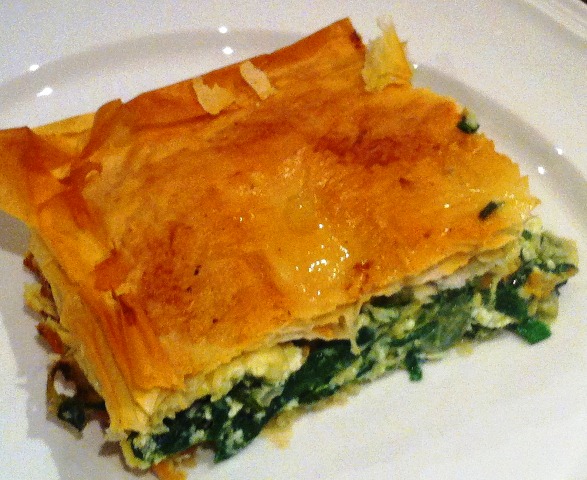
Lunch with the girls yesterday. Eventually talk turns to my blog. As I undoubtedly knew it would. My lovely friend Marianne apologetically tells me that she attempted to cook the Spinach and Three Cheese Pie and ended up with a soggy base. Truth be told I was mortified. I remember writing about how much I dislike soggy pastry in my pies in that particular post. Oh no! I’m literally eating humble pie as I type this.

Thanks for being so forthright and honest and telling me Marianne. So far I have had only positive feedback and really appreciate knowing when recipes don’t quite work. All the recipes featured in this blog are food I love to cook. I prepare these dishes often and while I try to be specific in my instructions, its difficult to cover all bases. Sometimes I have days in the kitchen myself when everything goes pear-shaped. Luckily because I cook these dishes so often I can usually avert disaster and correct things that don’t seem quite right as I go. While I have successfully managed to cook this dish without experiencing the soggy pastry problem, I can totally understand that it can and does happen.

Today I was on a mission to find a foolproof way of eliminating soggy spinach from this dish. The first thing I did was put in a (long distance) phone call to my mother. First thing she wanted me to do is read out the recipe. First comment she made was it’s always a bit risky not to cook the spinach first. Especially if you aren’t going to eat it straight away. Where is the steam going to go? Into the pastry of course! And you know what? The gorgeous Grace said almost exactly that at lunch yesterday. She always cooks her spinach first, and to make sure it’s totally dry wrings it in a clean (I’m betting brand new, just out of the packet) Chux Superwipe towel before adding it to her pie.

So the solution to this problem is quite straight forward and easy to resolve. In the interests of averting any future potential disappointment for any one else looking forward to trying my Spinach and Three Cheese Pie I’ve amended the recipe to use pre cooked spinach. And included explicit instructions on how to dry the spinach before adding it to the pie.  I do hope you give it another try Marianne. The flavours are so very delicious.

You can view the amended recipe here.

And one last comment about ovens and baking. It pays to know your oven’s particular quirks and idiosyncrasies  Too hot? Too slow? Cooks food unevenly? This will affect the quality of the finished product.

Some ovens even change their behaviour as they age as I found out last year. Needing to replace a faulty grill element on my eight year  old oven I called in a technician. While he was attending to the grill, he offered to recalibrate my oven. Huh? I had to ask him to explain what he was talking about. Apparently my oven was too fast and the thermostat had to be adjusted. Another easy fix. Now when my oven reads 180 C it is actually cooking at that precise temperature not at 210 C. Such a nice man, he didn’t even charge me extra. It was all included in the call out fee. Talk about service with a smile!

You can easily check to see if your oven is correctly calibrated  by purchasing an oven thermometer from a hardware store. Just heat the oven to 180 C and compare the readings. In theory, if the oven is correctly calibrated  the two readings will be exactly the same. Of course, you can always call a technician to recalibrate the oven for you. Next time I buy a new oven I am going to do this just before the warranty expires. I seem to learn something new everyday.

Posted in What I Love to Cook | Tagged , , , , , , , | Comments Off on Eating Humble Pie. Spinach and Three Cheese Pie Revisited.

Inspired by a Visit to Wombat Hill House Cafe. Roasted Carrot and Lentil Soup.

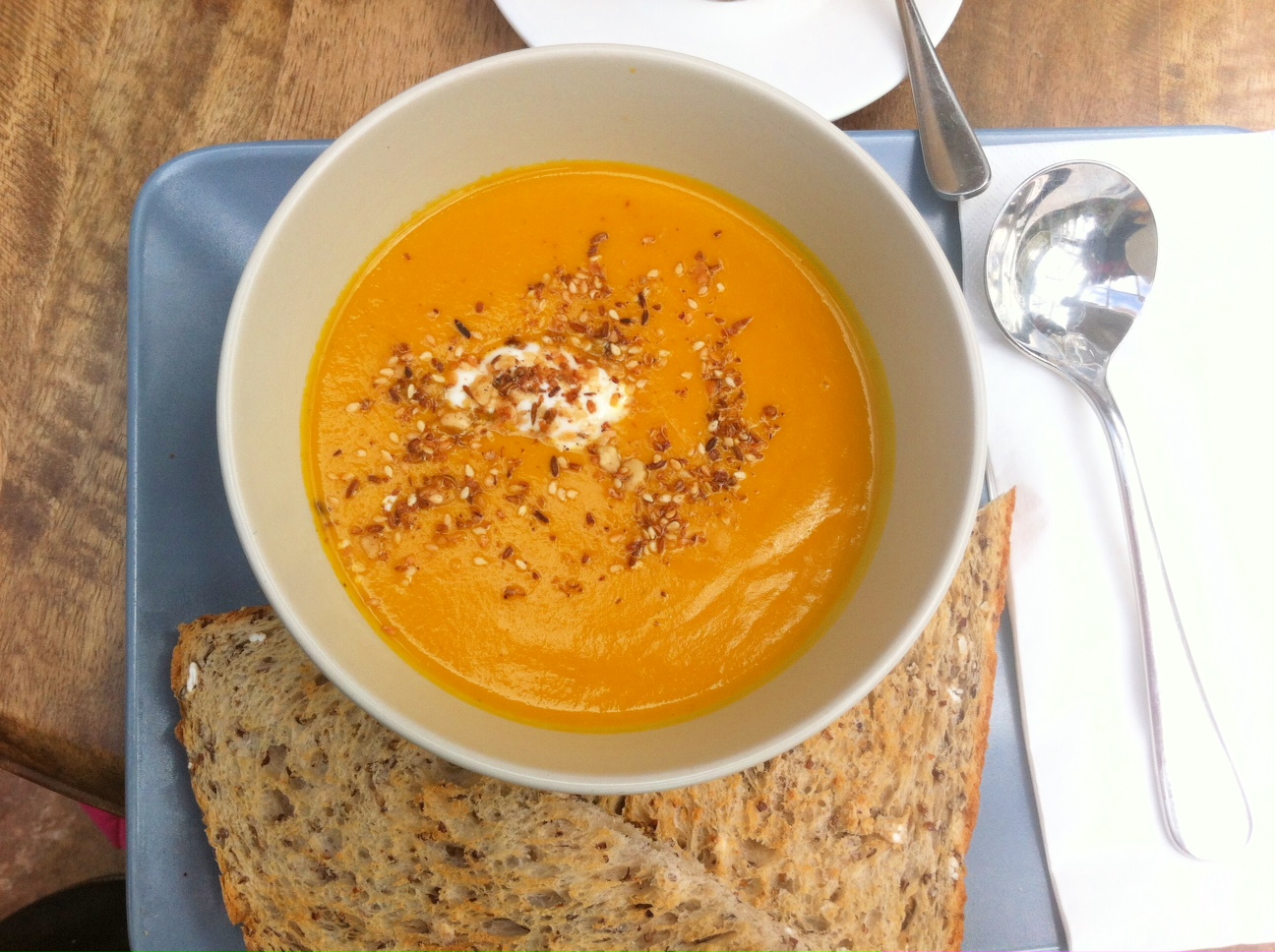
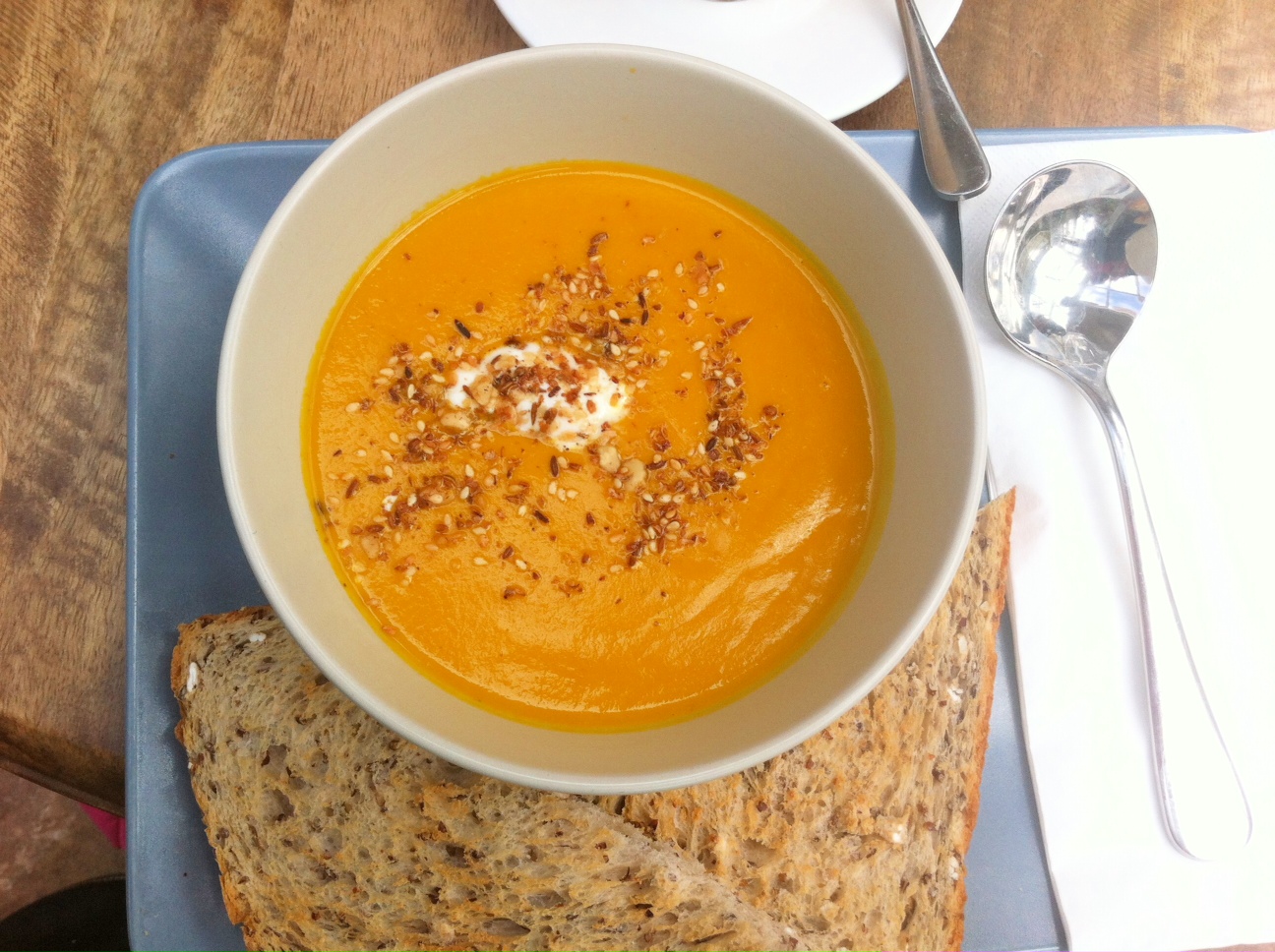
A glorious, golden Roasted Carrot and Lentil Soup inspired by our recent visit to the Macedon Ranges in the Victorian countryside.  This sweet, warming and very moreish soup is on the menu of Alla Wolf-Tasker’s newest venture the wonderful Wombat Hill House Cafe which is nestled in the old caretaker’s cottage in Daylesford’s Wombat Hill Botanical Gardens. Established in the 1860s, the gardens are perched on the summit of an extinct volcano and provide panoramic views over Daylesford and its surrounding districts. A stunning setting for a gorgeous cafe.

This year the Age Good Food Guide awarded Alla the “Living Legend” Award. This prestigious award recognises her commitment, enthusiasm and drive for over more than twenty years as an advocate for local tourism and hospitality in the Daylesford and Macedon Ranges area. With those credentials there was no way that we were going to miss the opportunity of dining at the Wombat Hill House Cafe. So after a very brisk stroll through the gardens on an unseasonably cold Spring day we decamped into the Cafe for a long, leisurely lunch.

Our first selection from the menu was the wonderfully aromatic Roasted Carrot and Lentil Soup pictured above. So beautiful and full of flavour that I was inspired to recreate it at home. Probably not a patch on Alla’s but it evokes happy memories of a much-anticipated and long overdue weekend away with two of my oldest friends.

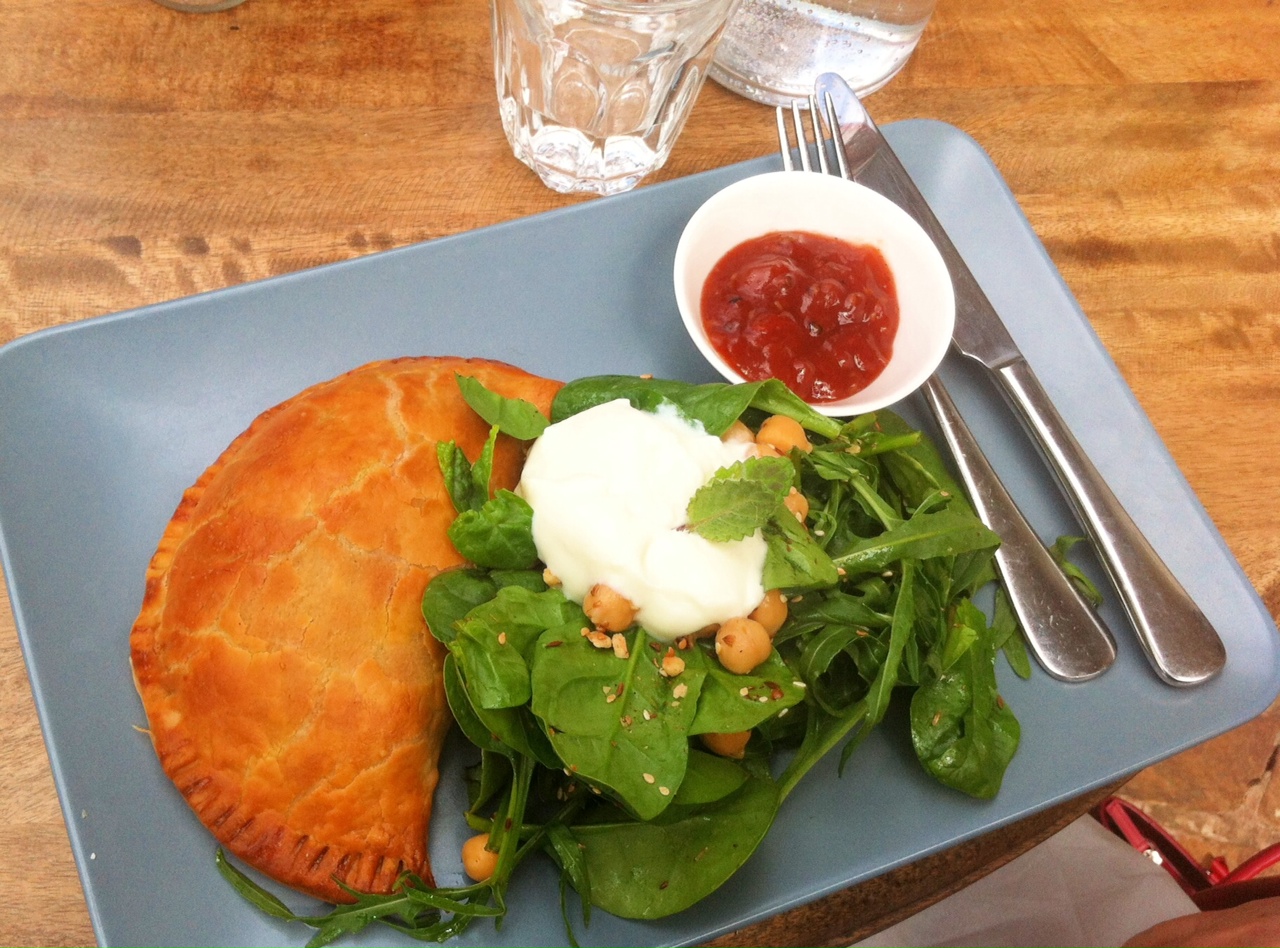
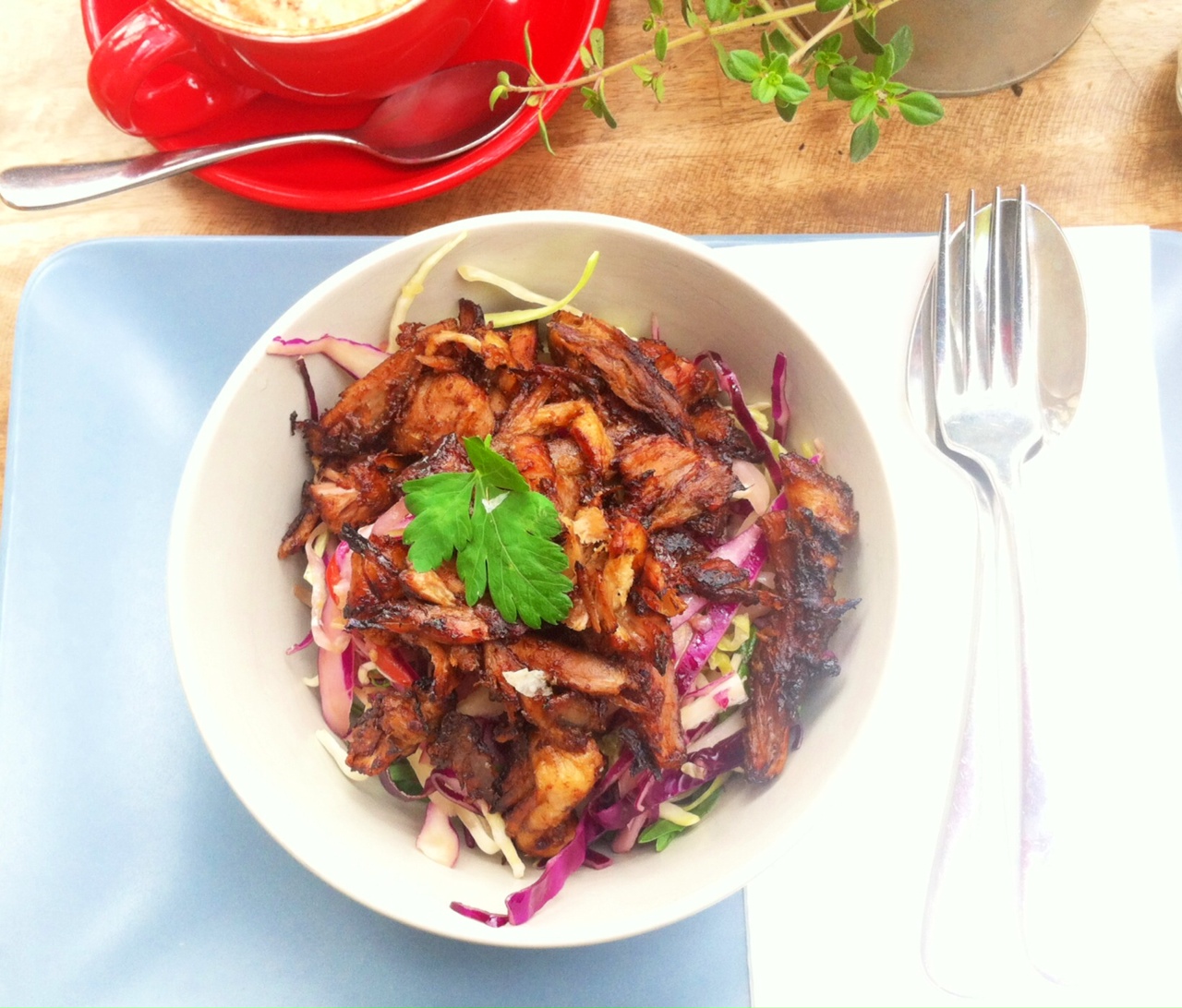
Next we sampled a Moroccan Dukkah Spiced Pasty with Kasundi Relish and a Chick Pea Salad. Absolutely delicious! Followed by a Crispy Duck Coleslaw.

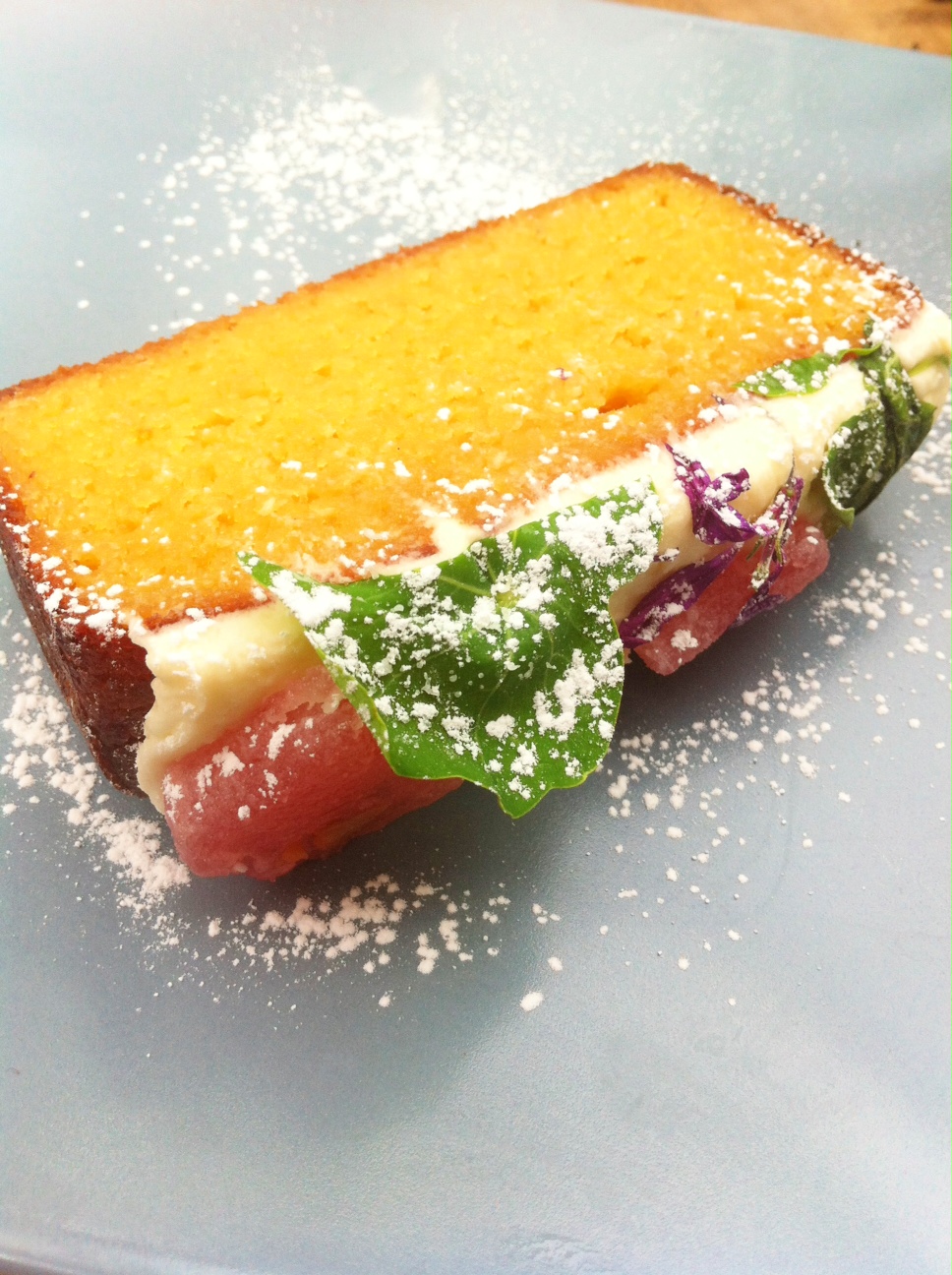
And of course we couldn’t resist the sweet treats at the counter. An unbelievably pretty Flourless Orange Cake with Cream Cheese Frosting, Turkish Delight and Nasturtium.

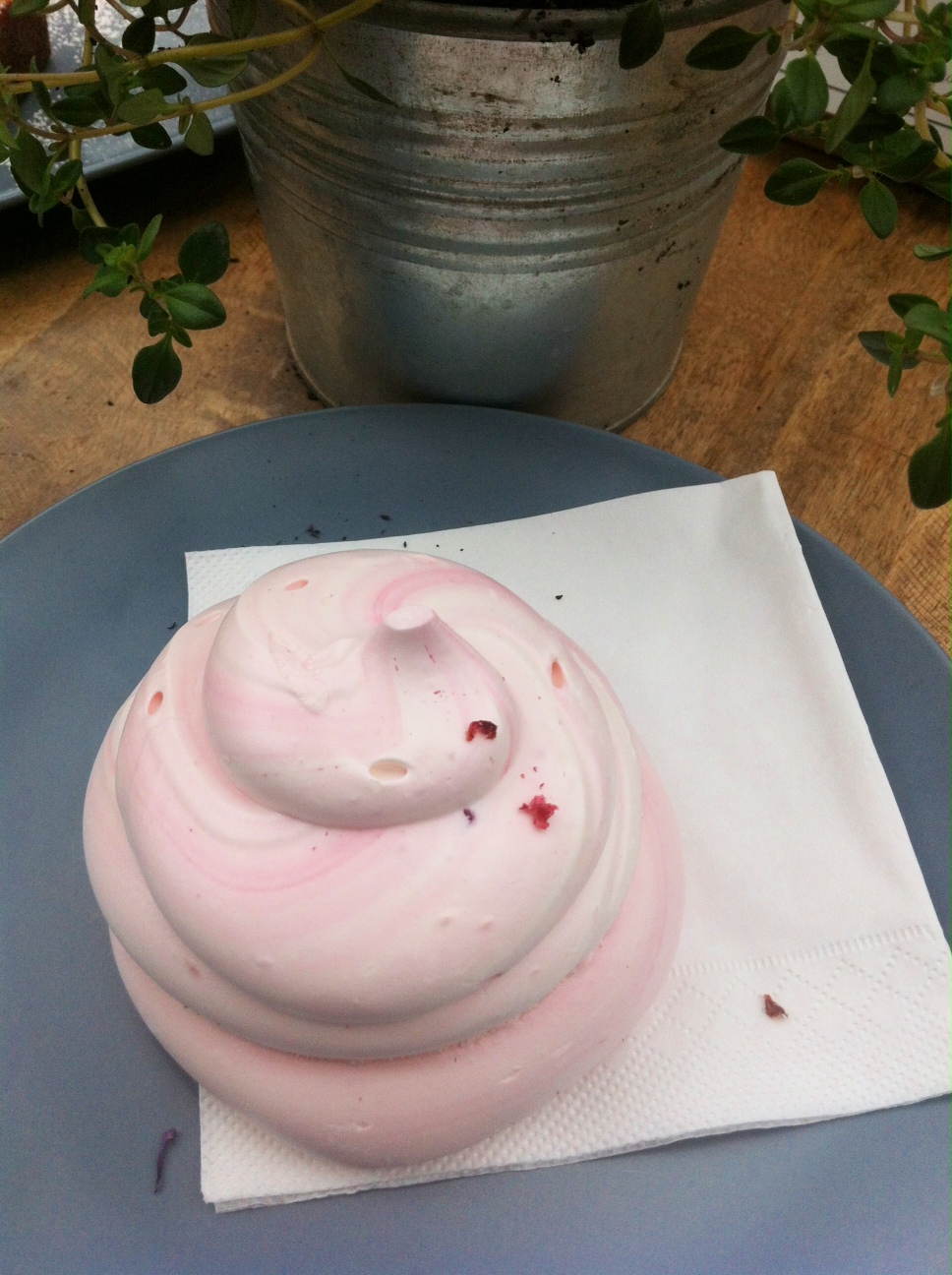
A cloud of Rose Water Meringue.

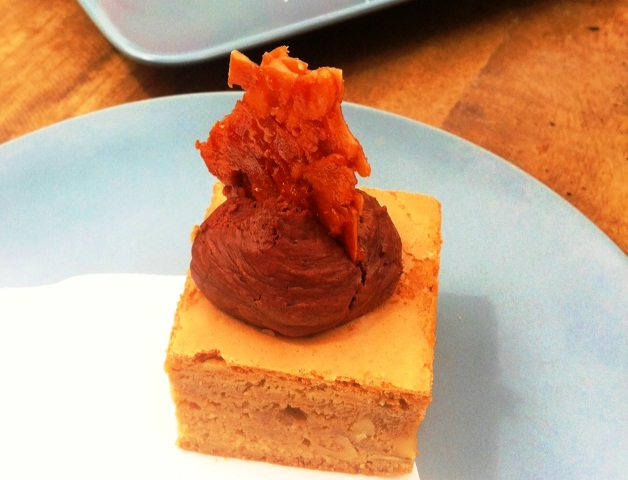
And last but not least a square of Walnut Slice with Chocolate Mousse and Almond Praline.

Suffice to say we enjoyed our  visit enormously.  The  vote is unanimous this is definitely a must go to and indulge destination for anyone visiting the area. Here is how you find it:

Wombat Hill House Wombat Hill Botanic Gardens (Car Entry off Central Spring Road), Daylesford, Victoria, Australia.
Website: http://www.wombathillhouse.com.au.

Back in Sydney I’ll attempt to recreate the memory of a wonderful lunch with my version of a Roasted Carrot and Lentil Soup.

Roasted Carrot and Lentil Soup
Serves Four

4 tbsp olive oil
500 g carrots, peeled and sliced lengthways for roasting
1 onion, peeled and chopped
1 stick celery, chopped.
2 cloves garlic, peeled and finely minced
1 long red chilli, finely minced
2 teaspoons ground coriander
1 teaspoon ground cumin
1 teaspoon turmeric
zest of 1 small lemon, peeled into long strips
75 g (1/2 cup) red lentils
1 litre (4 cups) chicken or vegetable stock
sea salt flakes and freshly ground black pepper
4 good tablespoons thick greek yoghurt and za’atar to serve

PREHEAT oven to 180 C.
LINE a large roasting pan with baking paper. Place carrots in the pan, drizzle with 2 tablespoons of oil, a generous pinch or 2 of sea salt and a good grinding of pepper. Toss to coat.
ROAST for 30-35 minutes or until golden and tender.

MEANWHILE, heat 2 tablespoons of oil in a large saucepan over medium heat. Add onion and season with salt. Reduce heat to low. SAUTE, stirring often, for 10 minutes until translucent.
ADD celery and cook for a further 5 minutes.
ADD coriander, cumin and turmeric to the pan, along with the chilli and garlic, and cook for a minute or two, until fragrant.
ADD the lentils and saute for about 5 minutes until they just begin to soften.
ADD the roasted carrots, stock and lemon zest. Increase heat to medium. Bring to a gentle simmer and cook, covered, for 15 minutes, until the lentils are soft.
REMOVE from heat and allow to cool for 10 minutes. Remove lemon zest. Purée soup using a stick or jug blender until smooth.
TRANSFER pureed soup to a clean saucepan. Return to heat and cook gently for a minute or two. Dilute with a little hot water if the soup seems too thick.
SEASON to taste with sea salt and freshly ground pepper.
LADLE into warmed bowls. SERVE with a generous dollop of yoghurt and sprinkling of za’atar.

Posted in Soup, Vegetables, Vegetarian, What I Love to Cook, Where I Love to Eat | Tagged , , , , , , , , , , , | 2 Comments

So Very Refreshing. Shaved Lemon and Fennel Salad with Rocket, Currants and Almonds.

Its Melbourne Cup Day in Australia. The race that stops a nation. Literally at 3.00 pm. A day for sweeps, calcuttas and flutters at the races all over the country. Hats and pretty dresses. Long lunches and champagne. Its going to be a hot and humid Spring day here in Sydney. Perfect weather for platters of fresh seafood and salad.

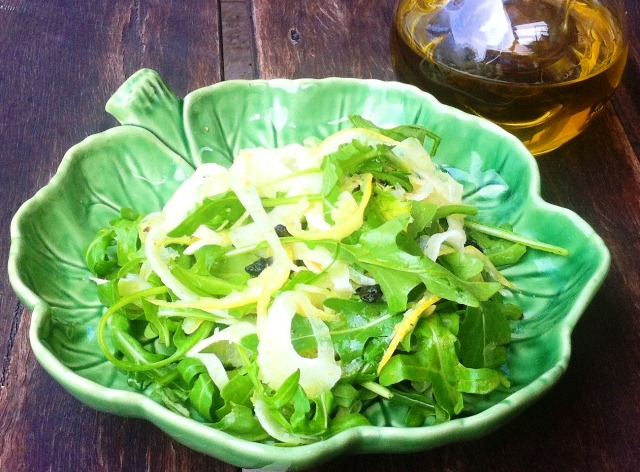
Here’s a refreshing little salad I like to prepare on hot days. Shaved slices of lemon pair beautifully with the fennel and rocket in this dish. The wafer thin slices of lemon help prevent the fennel from oxidising, and because they are so thin do not taste bitter. Use a whole small lemon; rind, pith and flesh.  I like to slice the lemon and fennel bulbs on a Japanese mandolin but there is no reason you couldn’t use a food processor, although you would probably have to cut the fennel and lemon into wedges to fit the chute.

If you are lucky enough to find fennel bulbs with their delicate, feathery, fronds attached, pick the fronds from the stalk and add to the salad with the rocket.

Slice the fennel and lemon earlier if you wish. Combine well and leave to chill in a bowl in the refrigerator.  Add all the other ingredients just before serving. The currants add sweetness and the almonds crunch. So easy to assemble. Even after a few glasses of champagne.

Shaved Lemon and Fennel Salad with Rocket, Currants and Almonds.

Serves 6 as a salad accompaniment to a meal

2 medium-sized fennel bulbs, trimmed and thinly sliced on a mandolin
1 small lemon, scrubbed and thinly sliced on a mandolin
3 cups wild rocket leaves, washed and dried
2 heaped  tablespoons slivered almonds, toasted
2 heaped tablespoons currants
sea salt flakes and freshly ground black pepper, to taste
a good drizzle of extra virgin olive oil

COMBINE shaved lemon and fennel in a bowl with rocket leaves, almonds and currants.
SEASON with sea salt flakes and a good grinding of pepper.
ARRANGE on a serving platter.
DRIZZLE with extra virgin olive oil.

Posted in Salads, Vegetables, Vegetarian, What I Love to Cook | Tagged , , , , , , , , , | 2 Comments

Breakfast at Popolo. Zucchini Frittata with Mint and Pecorino

We all know that breakfast is one of the most important meals of the day, but how many of us skip breakfast because we’re simply not hungry or too busy to take time in the morning to eat? I remember the mantra from my childhood years “Eat breakfast like a king, lunch like a prince and dinner like a  pauper”, and its fair to say that the only day of the week I heed its  advice is Sundays.

Long, leisurely breakfasts. At home or at a cafe, it really doesn’t matter. A luxury. My favourite weekend treat. This weekend with my husband away with our daughters for the annual Father Daughter Camp at Bundeena, my son and I ventured to our favourite local trattoria Popolo in McLachlan Avenue, Rushcutters Bay. A 10 minute stroll from home, just past Sydney Boys Grammar Weigall Playing Fields on Neild Avenue.

Sitting in the courtyard and sipping a cappuccino as I contemplated the menu I had a lightbulb moment. Popolo is open for breakfast, lunch and dinner on weekends. It even does take away.  For those of you in Sydney with teenage sons on the Saturday sport treadmill, Popolo is the answer to the coffee, panini or pastry fix when that compulsory sports commitment brings  you to Weigall. Just behind the grandstand, cross Neild Avenue and walk through the paved laneway of the Advanx building. Look to the left and you’ll find Popolo. Tucked away in a sunny courtyard facing McLachlan Avenue.

Sad but true, I have a comprehensive list of cafes that I visit all over Sydney on the weekend according to my children’s sport commitments. The overriding factor for inclusion in that list is great coffee. And if its a caffeine fix you’re after, Popolo hits the target every single time.

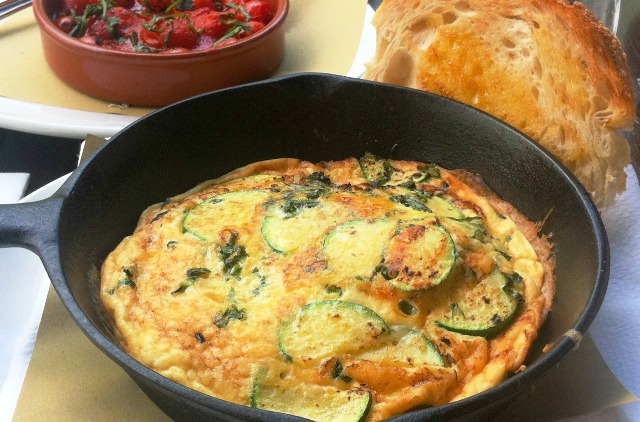
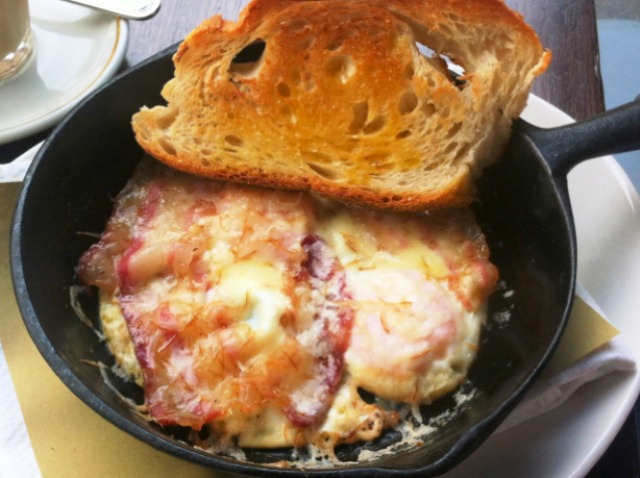
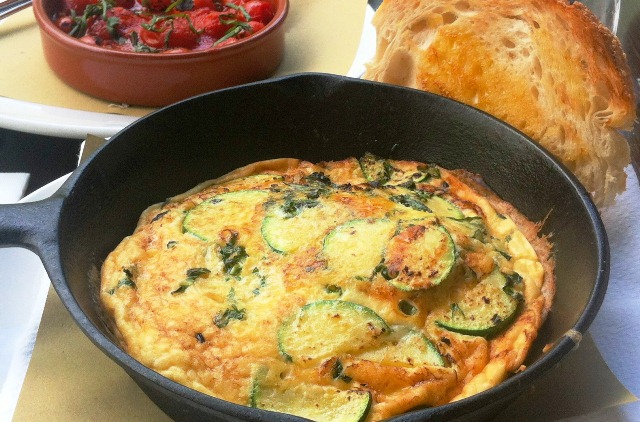
Getting back to our leisurely Sunday breakfast, we truly feasted like kings. Here is what we devoured with our obligatory cappuccinos. For me, Zucchini Frittata with Mint and Pecorino as pictured above. For my son, Tegamino; the Sicilian version of bacon and eggs or more eloquently fried eggs, pancetta, scamorza affumicata (smoked cheese) with buttered toast. Whichever way you describe it, delicious.

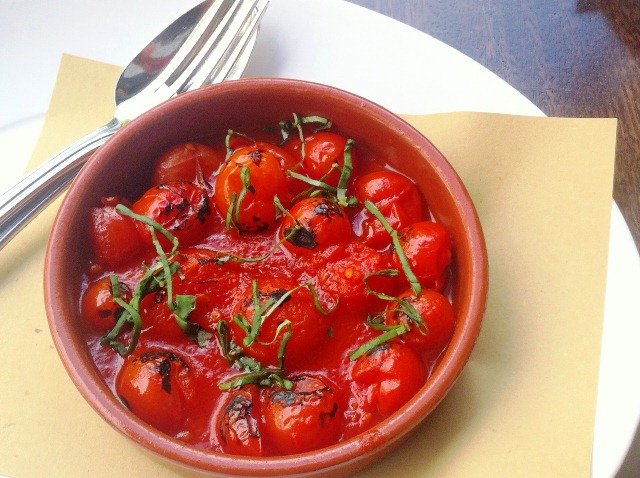
With a side serve of Strianesi. Baked  cherry tomatoes with tomato salsa and basil thrown in for good measure.

What is most impressive about Popolo is that they make everything from scratch. Beautiful bread, pastries, pizza, calzone and panini courtesy of a wonderful wood fired pizza oven. It is well worth a visit at 50 McLachlan Avenue, Rushcutters Bay. For those of you who won’t be visiting Sydney any time soon here’s my version of Popolo’s breakfast frittata with zucchini, pecorino and mint.

I often make frittata at home. It’s a very simple dish to make and extremely versatile as you can use almost any flavour combination. Delia Smith describes frittata as “Italy’s version of an open-faced omelette”. This recipe uses six eggs and produces a frittata large enough to serve four people. I simply slice the frittata into wedges to serve. Its delicious with a side salad for a light lunch or dinner.

If you would like to make individual serves of frittata a la Popolo, use 2 eggs and about a third of the quantities of the other ingredients specified in the recipe. Cook until frittata is puffed and golden. Buon Appetito!

Zucchini Frittata with Mint and Pecorino

Serves 4

2 tablespoons olive oil
50 g butter
300 g zucchini (courgettes), thinly sliced into rounds
6 eggs
2 tablespoons freshly grated pecorino
2 tablespoons shredded mint leaves
sea salt flakes and freshly ground pepper

HEAT the oil and half the butter in a pan, add the zucchini and cook, stirring occasionally for 10 minutes.
SEASON with salt and pepper and remove from heat.
LIGHTLY beat the eggs with a pinch of salt and stir in the zucchini, pecorino and mint.
MELT the remaining butter in a heavy based frying pan.
POUR in the mixture and cook on low heat for about 10 minutes until underside is set and lightly browned.
FLIP over and cook briefly to set and brown the top layer. Or alternately set the top layer of the frittata by placing the pan under a hot grill for a few minutes. This eliminates the need to flip the frittata.
SERVE hot or cold.

Posted in Breakfast, Eggs, Vegetables, What I Love to Cook, Where I Love to Eat | Tagged , , , , , , , , , | 4 Comments