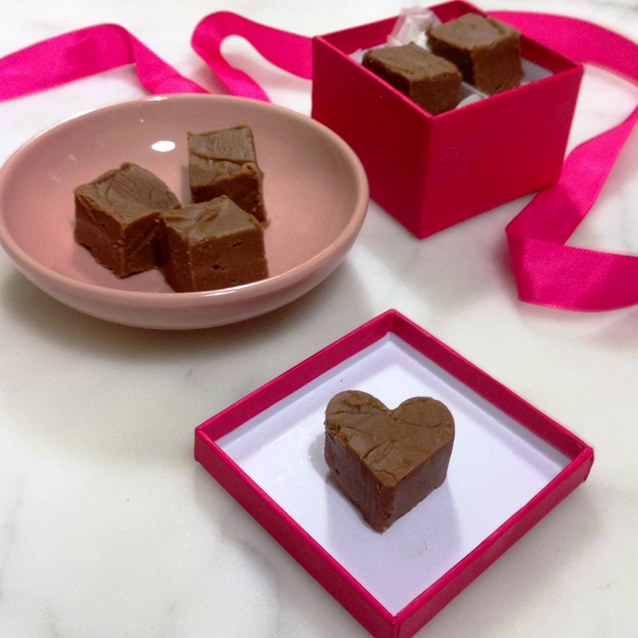
Perfectly Smooth And Creamy Fudge. The Old Fashioned Way. Just Like Grandma Used To Make.

Perfectly Smooth Old Fashioned Fudge

Lately I have been delving deep into my kitchen drawer and resurrecting recipes for old fashioned treats. The sort your grandma might have made.  Some crawled on scraps of paper, others  ripped  from the pages of newspapers and magazines. Earmarked as keepers and  haphazardly tossed into an overflowing plastic folder. Crumpled but not entirely forgotten. In amongst the baking of  Vanilla Magic Custard Squares and Passionfruit and Coconut Impossible Pie, I discovered a wad of annotated recipes for old fashioned fudge. Made the traditional way with a saucepan and a sturdy wooden spoon with all natural ingredients. Fresh pouring cream, sugar, butter, vanilla and chocolate.  No cheating allowed with cans of condensed milk, corn syrup, icing sugar or a favourite of our American counterparts, marshmallow fluff.

Those recipes transported me back to a family ski holiday to New Zealand when my children were younger.  One of the highlights of that trip was stumbling upon the fabulous Remarkables Sweet Shop in picturesque and quaint Arrowtown.  Home to a stunning array of old-fashioned home-made fudge. Rich, creamy and meltingly delicious, hands down the most delectable fudge we have ever tasted. Needless to say we developed an insatiable addiction, and once safely ensconced back hone  I was eventually coerced by my children’s endless pleading to try my hand at fudge making. New Zealand style. The old fashioned way with fresh cream.

What can I say? The road to perfect fudge, whilst lusciously achievable, is also fraught with peril and danger. It took a number of attempts and many hours to recreate a fudge on par with The Remarkables Sweet Shop offerings.  I discovered by first-hand experience that there’s a fine line between smooth, creamy and delectable, and a grainy, unholy mess. So much so that last Christmas I resorted to a quick and easy fool-proof  recipe on the back of a condensed milk tin to create Chocolate Fudge Christmas Trees

Browsing through that annotated wad of old-fashioned fudge recipes brought back many happy memories of that half forgotten holiday. My girls were so excited when I told them fudge making was back on the agenda. Making good use of all the annotated intelligence  in those crumpled pages my latest batch worked like a dream.

Summarised below is a step by step trouble shooting guide to making perfectly smooth and creamy fudge the old fashioned way, just like a Kiwi grandma might have made. The secret  to what is essentially a very simple recipe is in  understanding the process and avoiding the many potential  pitfalls.  I know I think I’ve fallen prey to most of them in the past. Don’t be daunted by the length of the recipe. At  face value, once you understand the secrets it could read something like this:

Combine cream and sugar in a saucepan over medium heat. Stop stirring when the mixture reaches boiling point, but continue  cooking undisturbed until it reaches soft ball stage. Remove from heat, add butter and vanilla. Do not stir or agitate the pan. Once butter has melted pour the mixture over a bowl of chocolate chunks. Beat with a wooden spoon until the fudge thickens and loses its gloss. Pour into a greased pan to set.

Obviously making gorgeously luscious, melt in your mouth fudge is a little like riding a bike. Once you know how, you never forget. This recipe is for you girls. The next batch is on you.
Perfectly Smooth Old Fashioned Fudge Just Like Grandma Used To Make

Perfectly Smooth And Creamy Fudge

4 cups caster sugar
2 cups pouring cream
250g (1 block)  butter, diced into small cubes
1 tablespoon pure vanilla essence
200g block dark chocolate

LINE  the base and long sides of a 18cm x 30cm  rectangular slice tin  or 20cm x 20 cm square baking tin with non stick paper, extending paper over sides. This makes removal of the fudge from the tin easy when set.

USING a little of the butter grease the sides of a heavy based, minimum 12 cup (3 litre) saucepan. The saucepan needs to hold twice the volume of the sugar and cream to avoid boiling over as the mixture is heated to soft ball stage, and a heavy base to avoid scorching. Buttering the sides helps stop  any residual undissolved sugar crystals from clinging to the sides of the saucepan.

PLACE sugar and cream into the buttered saucepan and stir well to combine. Cook over medium- high heat stirring constantly until the mixture just begins to boil. At this point all the sugar should be dissolved. Place a tight fitting lid over the saucepan and boil the mixture for just one minute. The steam will help dissolve any residual sugar crystals that may have been thrown onto the sides of the pan while stirring. Remove the lid.

CONTINUE cooking with no further stirring at a steady simmer until the mixture reaches soft ball stage ( temperatures in the 112-115°C range on a candy thermometer). I like to reduce the heat to medium-low and place a simmer mat under the saucepan to prevent the mixture from sticking to the bottom. This step usually takes about 20 -30 minutes at medium-low heat and will entirely depend upon the size and shape of your saucepan, cooking temperature of your stove and humidity of the day. To avoid any crystallisation of the mixture and a grainy fudge, resist the urge to stir.
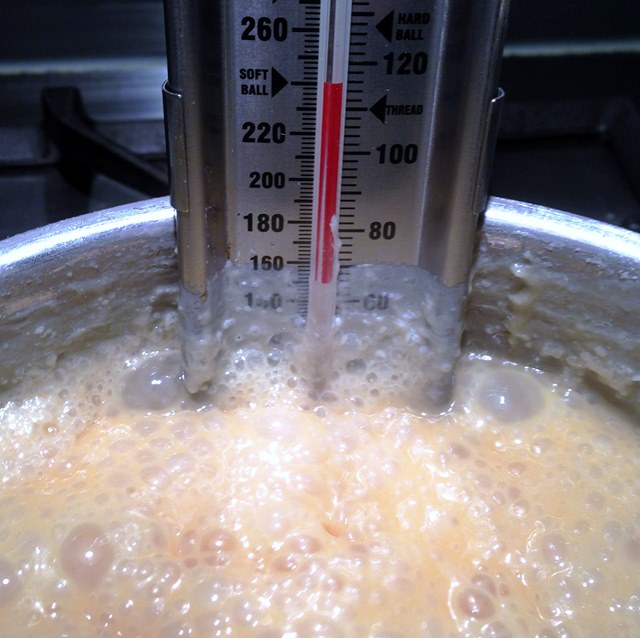
Perfectly Smooth Old Fashioned Fudge At Soft Ball Stage Candy Thermometer

USE a candy thermometer to gauge when temperatures reach soft ball stage but remember that thermometers are not always accurate. After cooking the mixture for about 15 minutes I like to begin testing my fudge to see how close it is to soft ball stage. The old-fashioned way by dropping a small teaspoon of the mixture into a glass of cold water.  The mixture should hold its shape after cooling down a little. If it flattens as it cools, it needs to be cooked for a little longer. If the mixture forms a hard ball the fudge has been taken too far and will seize as it is beaten and cools. It may be possible to rescue the fudge by taking a quarter of cup of the hot fudge mixture, diluting with an equal quantity of chilled pouring cream, then very carefully stirring the mixture back into the fudge without scraping the sides or bottom of the saucepan. Continue to cook until temperature reaches soft ball stage.
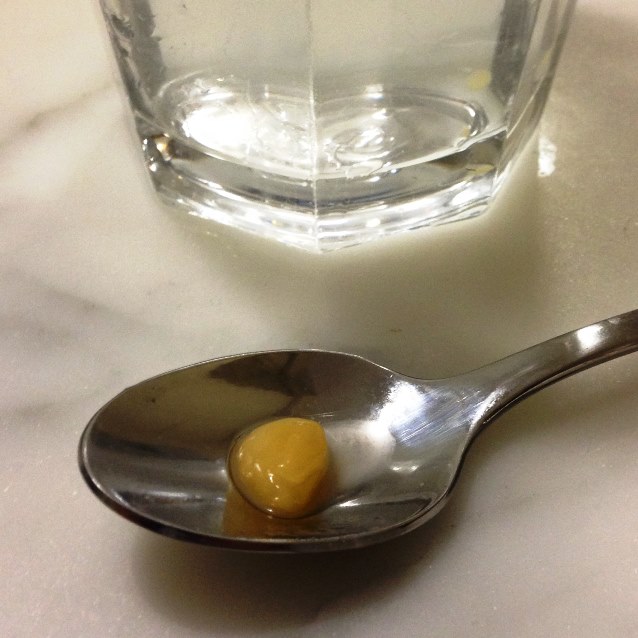
Perfectly Smooth Old Fashioned Fudge At Soft Ball Stage

IMMEDIATELY remove the saucepan from the heat when the mixture reaches soft ball stage (115 C).

GENTLY add the diced butter and vanilla to the saucepan. Do not stir the mixture or agitate the pan. Allow to sit for five minutes as the residual heat begins to melt the butter.

MEANWHILE break up the chocolate into small chunks and place into a large mixing bowl.

CAREFULLY pour the fudge mixture into the mixing bowl containing the chocolate, without scraping the sides or bottom of the saucepan. This is important as you do not want to introduce any errant undissolved sugar crystals into the fudge mixture.
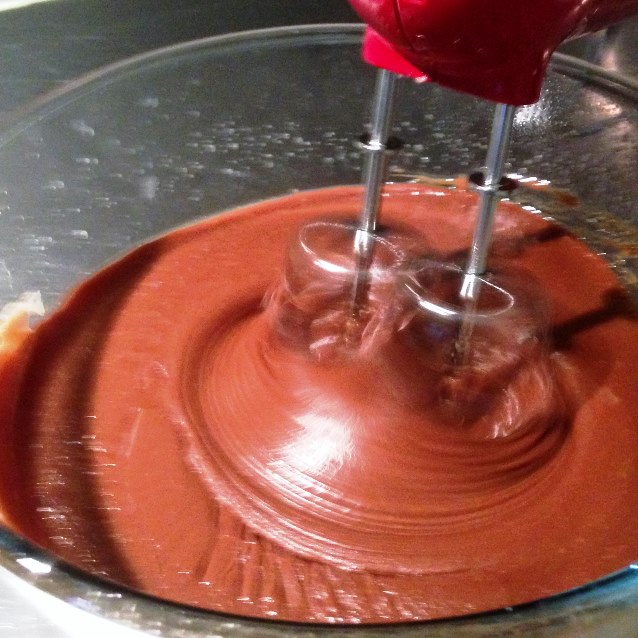
Perfectly Smooth Old Fashioned Fudge Beaten With Chocolate

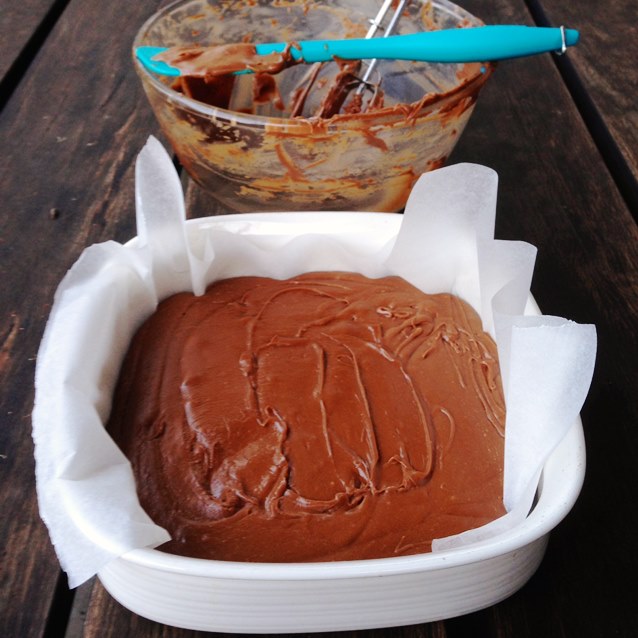
BEAT with a wooden spoon or on low speed with an electric mixer until smooth and thick. The glossy fudge mixture will lose its shine as you beat and become matte as it thickens and comes together.

POUR mixture into the prepared tin and allow to cool before turning out and scoring into small squares.

Posted in Chocolate, Confectionery, Sweet Treats, What I Love to Cook | Tagged , , , , , , | 17 Comments

Eat, Fast and Live Longer. A 5-2 Fast Diet Meal Idea Under 300 Calories. Shredded Filo Pastry Topped Chicken And Leek Pot Pies with Roasted Pear And Parsnip.

I’ve never been able to resist a well made pie. With the cooler weather well and truly settling in I’m suddenly craving chicken and leek pot pie. A personal favourite. Traditional comfort food. A crisp pastry lid blanketing an unctuously  rich and creamy filling. Warm and embracing. Like a big hug. At first glance probably not entirely appropriate  fast day fare, but with a little tweaking why not? After a lot of umm-ing and aah-ing I decided to give it a go, ending up with a delicious and filling pot pie for just 265 calories. Not a bad effort in my book. Leaving room for my other cooler weather indulgence. A 70 calorie mid morning skim cappuccino.

Obviously the rich and buttery flaky puff pastry lid was the first element to go. Replaced with light as air filo pastry shreds. Not a bad improvisation.  Giving the pies a crisp and crunchy topping whilst eliminating a whole swathe of calories. Fortunately there didn’t need to be a compromise on the luxuriousness of the filling.  The classic combination of chicken and leek remained. Sautéed in a little olive oil. My substitute for  the butter and cream? A puree of gorgeous, in season produce; oven roasted pears, parsnip and garlic cloves. Drizzled with olive oil. Flavoured with a sprig or two of fresh oregano. Dairy free. Fat free. Absolutely delicious. The sweetness of the pears complemented the earthiness of the parsnips beautifully.

Shredded Filo Pastry Topped Chicken And Leek Pot Pies with Roasted Pear And Parsnip
Makes 6 one cup ramekins (265 calories per serve)

3 tablespoons olive oil, divided (360 calories)
600g (about 4 or 5) boneless, skinless chicken thighs, trimmed and sliced into bite size pieces (730 calories)
1 medium leek, white and light green parts only, thinly sliced (37 calories)
2 medium parsnips, peeled and sliced into chunks, about 2 cups (180 calories)
2 small firm, ripe pears, peeled, cored and sliced into chunks, about 1 cup (92 calories)
2 garlic cloves, unpeeled and left whole (8 calories)
2 sprigs oregano (2 calories)
1/2 cup chicken stock (10 calories)
sea salt and ground white pepper
3 sheets filo pastry (171 calories)

PREHEAT oven to 180 C. Line an oven proof dish with baking paper.
PLACE the parsnips, pears, whole unpeeled garlic cloves and oregano sprigs into the oven dish.
DRIZZLE with one tablespoon olive oil and a good pinch of sea salt and white pepper. Toss well to combine then spread the ingredients over the dish in an even layer.
COVER the dish tightly with a layer of aluminum foil and bake in the preheated oven until the parsnips are tender, about 35 – 40 minutes.
REMOVE the oregano sprigs and roasted garlic from the baking dish. Place the roasted parsnips and pears and their juices into the bowl of a blender or food processor.
SQUEEZE the roasted  garlic from its skin and add  to the blender with half a cup of chicken stock. Pulse for up to a minute until the mixture is smooth. Set aside.
WHILE the parsnips and pears are roasting heat one tablespoon of olive oil in a large non-stick frying pan or wok over medium-high heat.
SEASON chicken with sea salt and white pepper and sauté until browned on all sides.
ADD leeks to the wok and cook, stirring, until soft and translucent, about 5 minutes.
REDUCE heat to medium low. Add the parsnip and  pear puree. Mix well to combine and cook for a minute or so until the purée is heated through.
SPOON the filling evenly into six one cup oven proof ramekins.
ROLL the filo pastry sheets up tightly. Use a sharp knife to slice the pastry into shreds.
UNRAVEL the pastry shreds into a bowl and drizzle with the remaining tablespoon of  olive oil . Toss well to ensure the shreds are evenly coated.
DIVIDE the shredded filo pastry evenly over the tops of the filled ramekins.
PLACE the ramekins on an oven tray Bake in hot 180 C oven for 15- 20 minutes until the tops are golden and the filling bubbly.

Posted in Poultry, What I Love to Cook | Tagged , , , , , , , , , , | 8 Comments

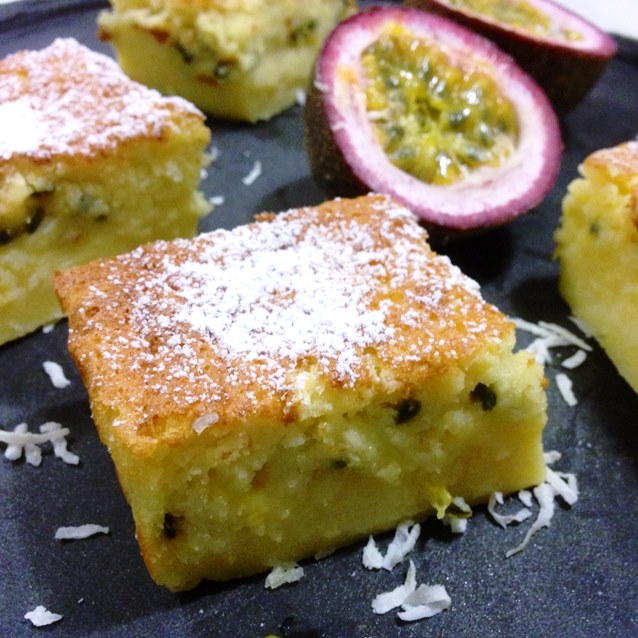
From The Old fashioned Australian Kitchen Pantry. Passionfruit And Coconut Impossible Pie.


Passionfruit And Coconut Impossible Pie

Last week’s Magic Vanilla Custard Squares proved so popular they were in demand all week long. I think we went through something like three batches.  Perfect for sharing which goes to show that old fashioned recipes are definitely the best. In amongst the repeated requests for an encore bake, I was reminded of an Australian recipe for the  quaintly named Impossible Pie. Made by our nannas generations ago using their staple pantry ingredients of butter, sugar, eggs, milk, flour and  of course dessicated coconut ; a necessary ingredient for our iconic Anzac biscuits. Tropically flavoured in the summer and autumn months with passionfruit plucked straight from backyard vines. Frugal and delicious

Impossible Pie. A half forgotten treat. So named not because the recipe is complicated but because the batter impossibly separates into two layers – crunchy coconut sponge blanketing a  moist soft  passionfruit custard centre. The original nanna certified recipe didn’t call for separating of the eggs into whites and yolks. In fact all the ingredients were simply added to  a large ceramic mixing bowl and beaten (most likely with a wooden spoon) until well incorporated before being poured into a greased baking dish or pie tin. Simple, practical and delicious.

With a beckoning supply of  seasonal passionfruit spilling out of my fruit bowl Passionfruit and Coconut Impossible Pie was suddenly on my baking agenda. Reading the ingredient list it struck me that Impossible Pie was a uniquely Australian interpretation of  the Magic Custard  Squares we had enjoyed all week. So here is my version of Passionfruit and Coconut Impossible Pie; a variation of the Magic Custard Squares. While my team of teenage taste testers adored both, the passionfruit and coconut combination definitely had a slight edge in their true blue Aussie opinion. The topping crunchier and the filling lighter  and definitely more tangy. For the record placing all the ingredients into one large bowl and beating them until well combined also works and is equally as delicious. Although if extra lightness, height and fluffiness is what you’re after separating the eggs is definitely a necessity.

Passionfruit And Coconut Impossible Pie

4 eggs
1/2 cup (125g) melted butter
1 cup sugar
1/2 cup plain flour
1 cup desiccated coconut
1  1/3 cups (335 ml) lukewarm milk
pulp and juice of 4 fresh passionfruit (about 1/2 cup or 125ml)
icing sugar, for dusting

PREHEAT oven to 150 C fan-forced. Line a 20cm x 20cm square tin with baking paper and set aside.
SEPARATE  the egg yolks from the whites. In a large, clean, dry bowl beat the whites with a good pinch of salt until they form stiff peaks. Set aside.
IN ANOTHER bowl, beat the egg yolks with sugar until light and fluffy.
ADD melted butter and passionfruit, beat well to combine.
ADD the flour, coconut and lukewarm milk at low speed until just incorporated.
USING a spatula gently fold the egg whites through the batter.
POUR into prepared tin. Bake for 50 – 60 minutes in a preheated oven until  light and golden with a fluffy crust.
COOL and serve sliced into squares with a generous dusting of sifted icing sugar over the top.


Posted in Baked, Fruit, Sweet Treats, What I Love to Cook | Tagged , , , , , , | 7 Comments

La Dolce Vita. A Sicilian Inspired Mother’s Day Brunch. Brioche With Lemon Granita.

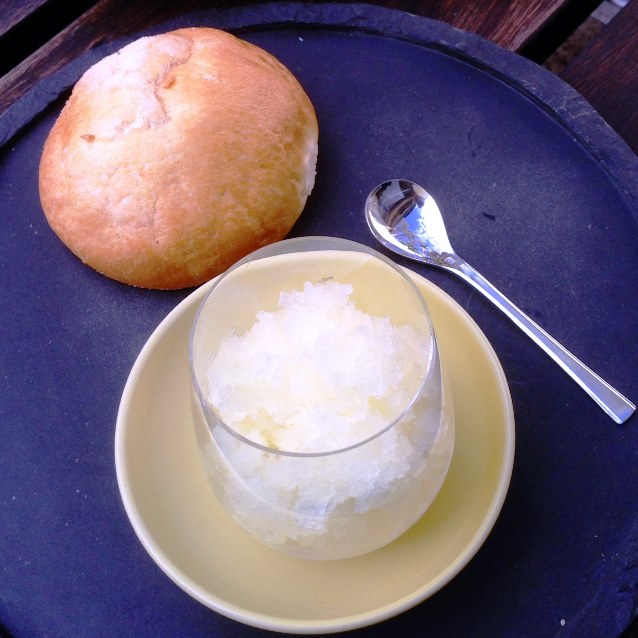
Lemon Granita With Brioche

This Sunday May 11 it’s Mother’s Day. Last year my family cooked up a storm in the kitchen serving up breakfast panini  filled with Bill Granger’s decadently creamy scrambled eggs, crispy prosciutto and peppery rocket. I’m not sure what is planned for this weekend but knowing their penchant for last minute, seat of the pants preparation I thought I’d provide a hint.  Something sweet and light.   Brioscia con limone granita, perhaps?  Which quite simply translates from Italian as brioche with lemon granita. La dolce vita. A delicious but simple Sicilian breakfast tradition. To be totally honest I’m not entirely convinced that any of them actually read any of my posts. Time will tell.

This  brunch idea was serendipitously  inspired by Serena from The Rustic Plate’s sweet musings in her post desserts aren’t just for dessert anymore. take this ricotta cake…  Having polished off the leftover dregs of ricotta cake for breakfast more often than I would care to admit, I’m not entirely averse to eating something sweet for breakfast. Curiously her post came hot on the heels of  my very recent visit to Little Italy’s Haberfield Bakery last Saturday morning. Standing proud amongst the usual offerings of wood-fired bread and pizza bases were a weekend speciality, rich, buttery Brioscie cu’ tuppu.  Sweet brioche rolls traditionally shaped with a small ball or bun on top. Of course I had to try them. Before long the conversation turned to the joys of  a Sicilian breakfast brioche eaten in the traditional way with icy tangy lemon granita.

Sadly I didn’t have the presence of mind to take a photo of  our gorgeous brioscie before we devoured them.  Not with the suggested granita but generous smears of another Italian favourite – Nutella, a rich and creamy chocolate hazelnut spread. Needless to say they were incredibly moreish and delicious.

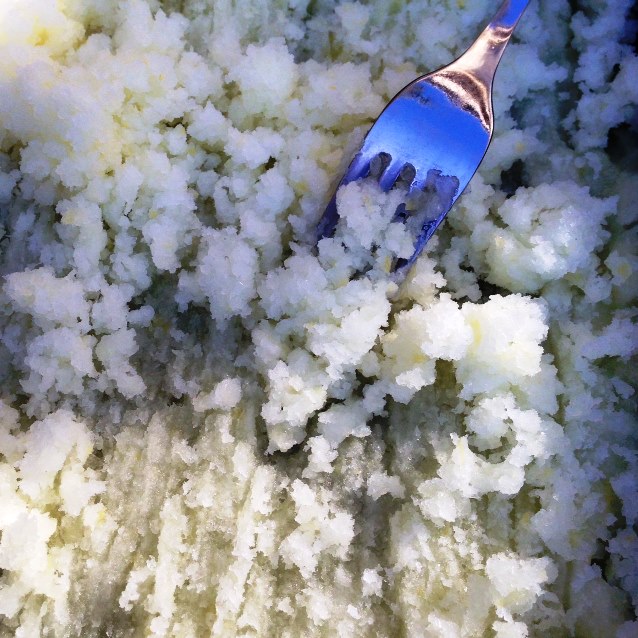
Since reading Serena’s post I haven’t stopped thinking about the intriguing combination of brioche and lemon granita. Returning from the markets yesterday afternoon with a big bag of juicy in season lemons provided the perfect excuse to make up a big batch of granita. Fortunately, it’s surprisingly easy to make. In essence it’s just  a simple sugar syrup generously flavoured with lemon juice and zest. In the interests of authenticity I made it the old-fashioned way. Poured into a wide, shallow baking tin, placed into the freezer and intermittently scraped with a fork to form grainy but fine  icy crystals.

Lemon Granita

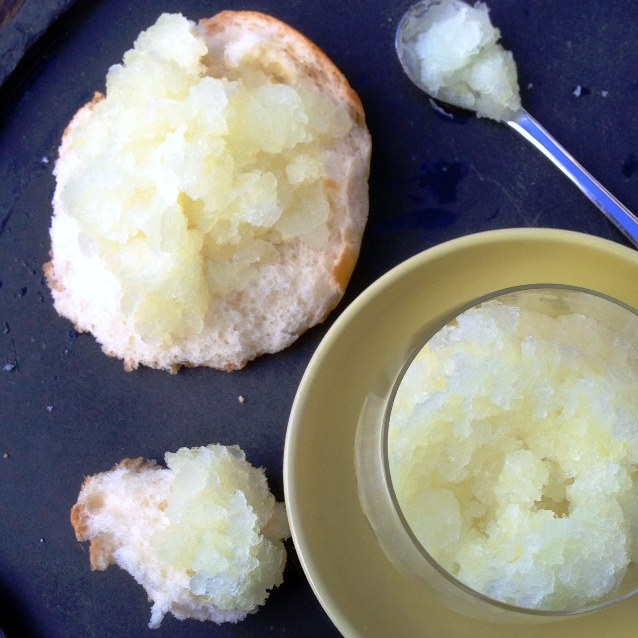
Of course the syrup can be churned to a slushy consistency in a modern ice cream maker, but that’s not how an Italian nonna would traditionally have made it. Our inaugural brioche with lemon granita tasting was a resounding success. Not for breakfast but for afternoon tea. There was no chance that we were going to wait until the morning to try it. This unusual combination really does work. Light and refreshing, the granita cuts through the buttery richness of the brioche.

I have absolutely no idea how my Mothers Day will unfold but I can’t think of a sweeter start to the day than a brioche served with a lemon granita. So simple and elegant. There’s a recipe for  the granita at the bottom of this post. So easy a child could make it. Perfect to prepare ahead.  As for  brioche it can be easily purchased from an obliging French or Italian bakery. Wishing you all  la dolce vita and a wonderful day.

Lemon Granita And Breakfaxt Brioche

Lemon Granita

2 cups water
1 cup caster sugar
1 cup freshly squeezed lemon juice (from 4-5 lemons), strained
finely grated zest of 2 lemons

COMBINE the water and sugar in a small saucepan, and bring to a boil. Simmer until the sugar is completely dissolved. Remove from heat, and stir in the lemon zest and strained juice. Allow to cool slightly.
POUR the cooled lemon syrup mixture into a wide, shallow ceramic baking tin and place in the freezer.
AFTER half an hour, remove the tin from the freezer.  Scrape the ice crystals from the sides and bottom of the tin, breaking up any frozen chunks on the edges, moving  and mixing them towards the centre.
RETURN the tin to the freezer and repeat the procedure another three or four times until all the liquid has solidified into loose ice crystals. The whole process should take will take anywhere between three and four hours depending upon the size of your tin. If the granita freezes too hard between scrapings simply leave the tin out on the kitchen bench for a few minutes to soften a little.
ALTERNATIVELY, the cooled lemon syrup mixture can be placed in an ice-cream maker and churned until it is slushy but not completely frozen.
STORE in the freezer until ready to use.  Serve in glass tumblers.


Posted in Breakfast, Frozen, Fruit, What I Love to Cook | Tagged , , , , , , | 7 Comments

Eating Your Winter Greens. Crispy Roasted Brussels Sprout Chips With Balsamic Vinegar And Sea Salt.

Crispy Roasted Brussels Sprouts With Balsamic Vinegar and Sea Salt

I was so excited this week to find new season brussels sprouts at the market. Small, tightly furled and a bright emerald green they caught me by surprise.  Weeks of uncharacteristically hot and humid weather, and a long, seemingly unending Indian summer have finally given way to a welcome cold snap. Suddenly our market stalls are flooded with cooler climate Autumn produce, broccoli, cauliflower, cabbages,  kale and brussels sprouts.

I have always been a fan of these unfashionable, much maligned little cabbage orbs and have long been on a mission to convince their many detractors that they truly are delicious. Finally I think I have found the perfect weapon. Crispy brussels sprouts chips. Cleverly deconstructed into leaves and hearts then roasted or fried to golden perfection. Reminiscent of last year’s  faddishly popular kale chip which seemed to be a fixture in my winter kitchen.  The verdict? Undeniably delicious and moreish. Instantaneously devoured by even the most sceptical, brussels sprout naysayer in our house. Suddenly there are no brussels sprouts loathers residing here. It’s music to my ears.

In the interests of experimentation I made these twice. Once roasted and once fried. To be honest there’s very little difference in flavour or crispness prepared either way. My preference, however,  is towards roasting. Mostly because it involves an easier clean up of the kitchen afterwards, and of course uses a lot less oil and has to be healthier for you.

Crispy Roasted Brussels Sprout Chips With Balsamic Vinegar And Sea Salt

These are delicious roasted in the oven, or even fried. Whilst the main recipe is for roasted brussel sprout chips I have also included instructions for frying at the very bottom of the post.

500g brussels sprouts
3-4 tablespoons olive oil
sea salt
balsamic vinegar, for drizzling

PREHEAT oven to 180 C fan-forced. Line two large oven trays with baking paper.
USING a sharp paring knife, trim the stems off the brussels sprouts and peel away the outer leaves into a large bowl, discarding any that are tough or blemished. Continue trimming the stems and peeling away the leaves, until the leaves no longer separate easily. Place the hearts of the brussels sprouts into a separate bowl.
SLICE the brussels sprouts hearts in half, drizzle with a little olive oil and toss until lightly coated. Spread evenly over one of the lined oven trays. Sprinkle liberally with sea salt and place in hot oven to roast for about 15 minutes until golden and crispy.
MEANWHILE toss the leaves with a little olive oil until lightly coated. Spread in an even layer over the second lined oven tray and season liberally with sea salt. Roast in a hot oven for about 10 minutes until golden and crispy.
TRANSFER the roasted hearts and leaves to a large bowl. Drizzle over a little thick and syrupy balsamic vinegar. Serve immediately.

TO FRY
FILL a wok or frying pan with 5cm of vegetable oil and heat until a tester leaf dropped into the oil sizzles and cooks quickly.
FRY brussels sprouts hearts in a separate batch for a minute or so until golden and crisp.
THEN fry brussels sprouts leaves in two or three batches for 30 seconds at a time, until golden and crisp.

Posted in Baked, Vegetables, Vegetarian, What I Love to Cook | Tagged , , , , , , , | 3 Comments

Eat, Fast and Live Longer. A 5-2 Fast Diet Meal Idea Under 400 Calories. Warm Chicken And Fregola Salad With Charred Radicchio and Fennel.

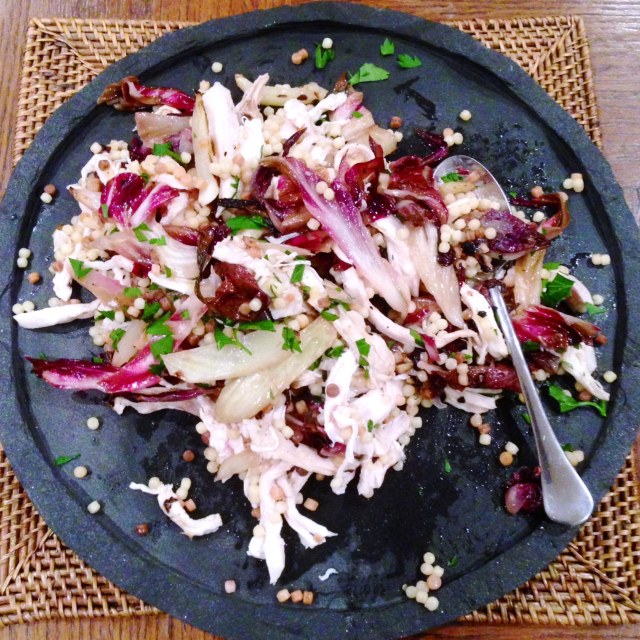
Warm Chicken And Fregola Salad With Charred Radicchio and Fennel

I will admit that over the past month I have been more than a little lax with my 5-2 fast diet. Five two effortlessly morphed into six one and for one particularly hectic week reached a rock bottom seven zero. This week well and truly marks the return to a no holds barred five two fast day regime.

What to eat to get back on track? I’m thinking something substantial to ease myself back into the routine. This warm poached  chicken salad hits the spot. Studded with just enough toasty fregola (a Sardinian  pasta which I adore) to keep the hunger pangs at bay and plenty of charred bitter radicchio and aniseed-y fennel to add freshness and crunch.

A perfect cooler weather salad  that makes the most of our wonderful Autumn produce and ticks all the 5-2 fast day meal boxes.  Tastes divine, is low in calories and wonderfully vibrant on a plate. On that last point you will have to take my word for it. As you can see my diners wasted no time digging into the platter before I had time to take the crucial photo. Proving yet again that rumbling stomachs wait for no-one.

Warm Chicken And Fregola Salad With Charred Radicchio and Fennel
Serves 4 (322 calories per generous two cup serve)

1 cup toasted fregola sarda (or substitute Israeli couscous prepared to packet instructions) (510 calories)
2 cups chicken stock (40 calories)
1 small head radicchio treviso, cored and sliced (75 calories)
1 medium fennel bulb, trimmed and sliced into eighths (73 calories)
2 x 150 g chicken breasts, poached (330 calories)
2 tablespoons extra virgin olive oil (240 calories)
juice and finely grated zest of 1 large lemon  (24 calories)
2 tablespoons white balsamic vinegar (24 calories)
2 tablespoons fresh parsley, roughly (chopped 2 calories)
sea salt and freshly ground pepper

BRING a saucepan of  stock to the boil. Add fregola. Cook for 10 to 12 mins or until al dente (firm to the bite but not hard). Drain and refresh under cold  running water.
PLACE cooked fregola into a large bowl. Add one tablespoon olive oil, lemon juice and zest. Toss well to combine. Set aside.
COAT chopped radicchio and fennel with the remaining tablespoon olive oil and season with sea salt and freshly ground pepper.
HEAT a griddle pan until smoking. char grill the radicchio and fennel until cooked through but still crunchy.
MEANWHILE shred the poached chicken. Add to the fregola salad together with the charred radicchio and fennel.
DRIZZLE with white balsamic vinegar, season with a little more sea salt and pepper, and toss to combine.
GARNISH with chopped parsley to serve.

Posted in Poultry, What I Love to Cook | Tagged , , , , , , , , | 8 Comments

For The Weekend. Quick and Easy. Spicy Spanish Style Potato Omelette With Chorizo And Green Peppers.

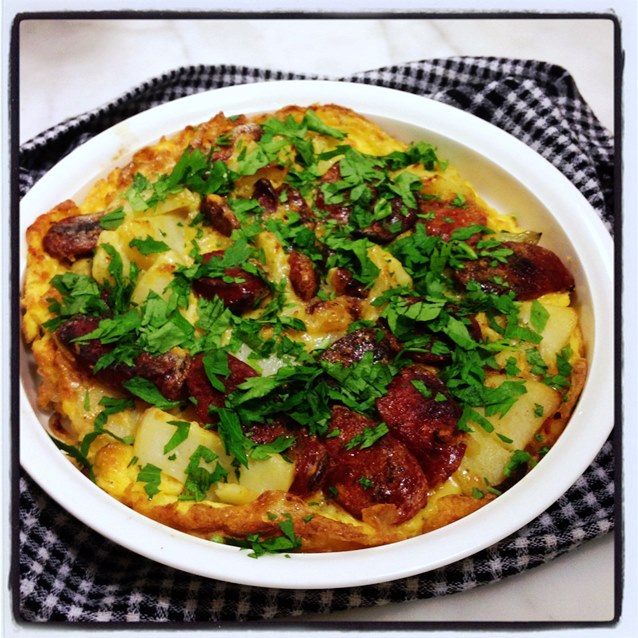
Spanish Style Potato Omelette With Chorizo And Green Peppers
It has been a while since I have posted a recipe for a Spanish style omelette. Laden with soft golden fried potatoes and onions, it truly is comforting and delicious. Reminiscent perhaps of an Italian frittata. Strictly speaking a tortilla di patatas.  One of my go to recipes for the weekend when I need something filling to feed my family that’s also quick and easy to prepare.

Here I’ve added spicy chorizo and green peppers to the mix to amp up the flavour and add teenager appeal to a very simple dish. There is always s reliable supply of chorizo on hand in our house. A modern staple of sorts. Guaranteed to keep everybody happy and more importantly quell those weary battle cries of there’s nothing to eat. An oxymoron of course. Particularly when said peering into a fully laden fridge, specifically restocked for a weekend of ravenous and unrelenting eating.

Spicy Spanish Style Potato Omelette With Chorizo And Green Peppers
Serves 4 generously

250 ml (1 cup) olive oil plus 1 tablespoon
4 medium-sized potatoes, peeled, quartered and thinly sliced
1 onion, peeled, quartered and thinly  sliced
2 cloves garlic, peeled and thinly sliced
2 medium-sized chorizo sausages, sliced on the diagonal about 1cm thick
2 long green peppers, sliced into thick strips
6 eggs
75g (3/4 cup) gruyere cheese, grated.
sea salt and freshly ground pepper
2 tablespoons parsley, roughly chopped, to garnish

HEAT  1 cup  oil in large non stick ovenproof frying pan and gently fry the potato, garlic and onion until almost soft, stirring from time to time so that they don’t burn on the bottom of the pan.
DRAIN in a colander to get rid of the excess oil. The potatoes should be soft but not crisp. Season to taste and set aside.
ADD the chorizo slices to the frying pan and cook on high heat until nicely browned on both sides. Remove the chorizo slices to a paper towel lined plate then add the green peppers to the frying pan. Cook until soft. Add to the potato mixture.
MEANWHILE beat eggs in a separate bowl.  Stir in grated gruyere cheese.  Season with a little sea salt and freshly ground pepper
WIPE the frying pan clean. Heat the remaining tablespoon of oil in the frying pan on medium heat.
TIP in the potato mixture in an even layer over the base of the pan.  Place the chorizo slices on top then carefully pour over the egg mixture.
TURN the heat to low and cook for 10 minutes until the eggs are nearly set. Shake the frying pan from time to time so that the tortilla doesn’t stick to the bottom.
PLACE pan under a hot grill, cook for a couple of minutes more until the top is set and golden.
SPRINKLE over chopped parsley, slice into wedges and serve with a green salad and a baguette.

Posted in Eggs, What I Love to Cook | Tagged , , , , , , , | 4 Comments

From The Old-Fashioned Kitchen Pantry. Magic Vanilla Custard Squares.

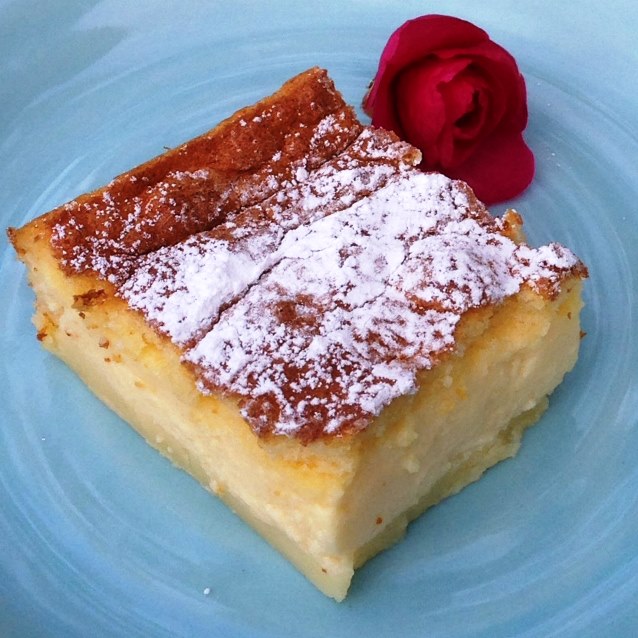
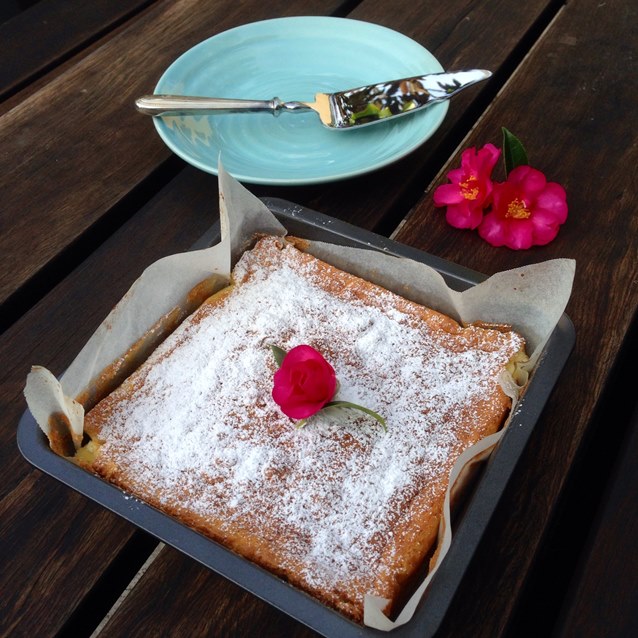
Magic Vanilla Custard Squares

Eggs, butter, milk, sugar, flour and vanilla. Six staple ingredients that can be found in almost any kitchen pantry. I’m always amazed at the many different ways these basic elements can be combined to produce a wide variety of delicious desserts and sweet treats. This old-fashioned recipe for Magic Vanilla Custard Squares is no exception. It’s the kind of recipe that might be squirreled away  in your granny’s carefully guarded, hand written recipe book. Magic happens when these simple pantry ingredients combine to produce a batter that serendipitously separates into three distinct layers as it bakes. A dense bottom, a lusciously creamy custard  middle and a light and airy sponge top.

The recipe couldn’t be simpler. Room temperature eggs are separated into yolks and whites, each whipped into an airy frenzy. The whites with a generous pinch of salt to stiff peaks, the yolks with sugar, a dash of vanilla and water to a creamy confection. To produce a silky textured custard layer, melted butter and tepid (lukewarm) milk are added to the mixture. With the addition of two generous cups of milk expect a thin and runny batter; necessary to coax the formation of the custard layer. A final gentle folding of the whipped whites through the batter provides encourages the sponge layer to rise through the custard and ensures a beautifully light result.

On second thoughts, perhaps the magic in these little custard squares also refers to their popularity. They certainly disappeared like magic.  In a flash. What was intended as a back to school lunch box filler has quickly been demolished.  As I write this post just one square remains. No doubt  our phantom snacker Mr Nobody has been busy visiting our cake tin yet again.

Magic Vanilla Custard Slice

Magic Vanilla Custard Squares 

4 eggs, separated, at room temperature
pinch of salt
1 tablespoon water
3/4 cup (150 g) sugar
1/2 cup (125 g) butter, melted
2 teaspoons pure vanilla essence
3/4 cup (115 g) plain flour, sifted
2 cups (500 ml) milk, lukewarm
icing sugar, sifted, to dust

PREHEAT oven to 150 C fan-forced. Line a 20cm x 20cm square tin with baking paper and set aside.
SEPARATE  the egg yolks from the whites. In a large, clean, dry bowl beat the whites with a good pinch of salt until they form stiff peaks. Set aside.
IN ANOTHER bowl, beat the egg yolks with sugar, water and vanilla until light and fluffy.
ADD melted butter and continue beating for another minute. Then add the flour a little at a time until well incorporated.
BEAT in the lukewarm milk a little at a time until combined. The mixture will be quite liquid and runny.
GENTLY fold the egg whites into the batter with a spatula until just combined. This may take a few minutes. Don’t be tempted to use the beater as the mixture will eventually come together. You want to retain the lightness and airiness  of the batter.
POUR into prepared tin.Bake for an hour in a pre heated 150 C oven until a light golden crust has formed on the top of the slice.
COOL in the tin for at least 2 hours so that the custard layer sets. Serve sliced into squares with a generous dusting of sifted icing sugar over the top of the cake.

Posted in Baked, Sweet Treats, What I Love to Cook | Tagged , , , , , , , , | 5 Comments

Eat, Fast and Live Longer. A 5-2 Fast Diet Recipe Idea Under 100 Calories. Lemon, Silverbeet and Green Lentil Soup.

Lemon, Silverbeet and Lentil Soup

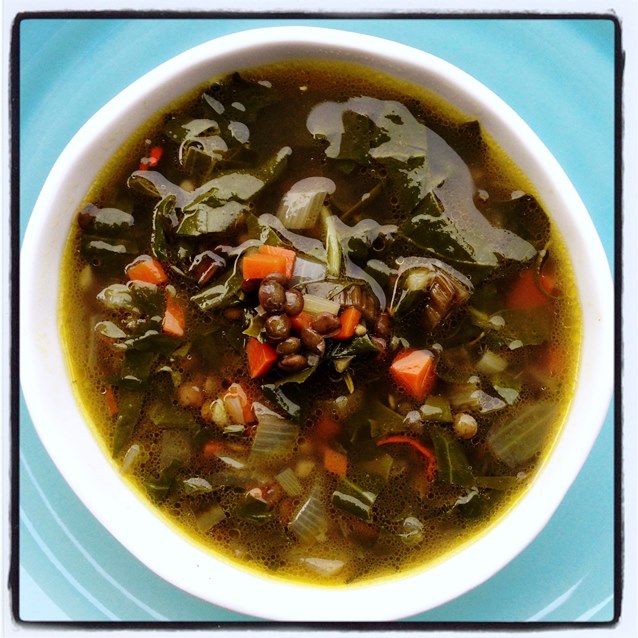
A big bowl of  hearty, rustic lentil soup. The perfect antidote to an extended long Easter weekend of  of unfettered overindulgence. This Lemon, Silverbeet and Lentil Soup is wholesome and  nourishing, jam-packed with in season produce picked from my father’s vegetable garden. Leafy green silverbeet, low in calories and rich in phytonutrients the star of the show.  A gorgeous pairing with nutty green lentils; their earthiness freshened up with a little lemon zest and juice.

At just 86 calories for a very filling one cup serve, this soup is delicious and very, very good for you.  Easy to prepare, it’s welcome addition to my Autumn 5-2 fast day recipe repertoire. The bonus is that one big batch goes a long, long way. Enough to enjoy immediately for lunch or dinner, with a generous amount of leftovers to freeze for another day. The perfect ready meal solution for those inevitable fast days when I’m tired and hungry, and just can’t seem to summon up the energy to cook.

Lemon, Silverbeet and Green Lentil Soup
Makes 12 cups  (86 calories per cup)

1 tablespoon olive oil (120 calories)
1 onion, diced (46 calories)
1 leek, white part only, finely chopped (54 calories)
2 cloves garlic, finely (8 calories)
1 small red chilli, finely chopped (4 calories)
1 bunch (3 cups stems and 5 cups leaves) silver beet (56 calories)
1 small carrot, peeled and finely diced (26 calories)
1 large rib celery, finely diced (8 calories)
3/4 cup green (Puy) lentils (510 calories)
1 lemon, zested and juiced (12 calories)
2 tablespoons fresh parsley,  finely chopped (2 calories)
1 1/2 litres (6 cups) chicken or vegetable stock (120 calories)
the rind of  a piece of parmesan cheese (50 calories)
sea salt and freshly ground pepper

RUN a sharp knife down the stalks of the silver beet to remove the stem from the leaves. Finely dice stalks. Stack leaves on top of each other, tightly roll  up and shred into thin strips.
PLACE oil in a large saucepan over medium heat.
ADD onion, leeks and garlic. Cook, stirring occasionally, for about 10 minutes until tender and translucent.
ADD celery, carrots, silver beet stalks, lemon zest and chilli. Cook stirring occasionally until tender.
STIR in lentils. Then add stock, parsley and parmesan cheese rind.
BRING to a simmer. Cover and cook, stirring occasionally, until the lentils are just al dente (tender but still firm to the bite).
ADD silver beet leaves and cook until they begin to wilt.
REMOVE the parmesan rind from the soup. Add the lemon juice and season with sea salt and freshly ground pepper to taste.
LADLE into bowls to serve.

Posted in Soup, What I Love to Cook | Tagged , , , , , , , , | 4 Comments

Lest We Forget. April 25th. A Day Of Commemoration. ANZAC Day Granola.

By the time you read this we will have returned from the 4.30 am Dawn Service at the Centopath in Martin Place, Sydney, and dropped in for a fortifying espresso at the Coluzzi Bar in Darlinghurst before heading home for a very early breakfast of ANZAC Day Granola. Not madness but all for a good cause. Today in Australia and New Zealand we’re celebrating ANZAC Day. In commemoration of the bravery of all the men and women who have served our countries through  war.  

The Centopath (which means ’empty tomb’) was originally erected in 1929 to honour the many soldiers who had died abroad defending our country in  World War I. Martin Place, widely considered to be the heart of the nation at that time, also happened to be where many Australian soldiers enlisted in the war.  It’s therefore  fitting that Sydney’s dawn service is held here. Poignant and hauntingly beautiful, it’s a requiem service at half-light. Accompanied by a traditional two minutes of silence, to remember those who had fallen, that ends with a lone bugle call of the Last Post.

In anticipation of our very early start I’ve made an ANZAC Day Granola. A modern twist on the traditional ANZAC biscuit originally baked by soldiers’ wives and mothers during World War I, and packed in food parcels to be sent to loved ones in the trenches. Made of rolled oats, sugar, plain flour, coconut, butter, golden syrup, bi-carbonate of soda and boiling water. All  items that did not readily spoil and were able to withstand the long voyage to the troops by sea.

In this reinterpretation I’ve taken the essential ingredients of that traditional ANZAC biscuit and incorporated them into a gorgeously crisp and golden granola.  A deliciously deconstructed version of the original Country Women’s Association recipe which can be found in one of my earlier posts  Sustaining the Troops. Good Old Fashioned ANZAC Biscuits.  Perfect fare for an ANZAC Day breakfast. Particularly delicious when teamed with another popular Australian institution a generous tablespoon of  malted chocolate flavoured Milo in your milk. A combination that’s obviously too inviting to resist. Just ask the pair of native currawongs that gate crashed my photo shoot, up ended the glass of milo and helped themselves to a whole bowl of ANZAC Day granola.

Anzac Day Granola
Makes 3 cups

1 1/2 cups traditional rolled oats
3/4 cup shredded coconut
3/4 cup slivered almonds
1/2 teaspoon ground ginger
1/2 teaspoon ground cinnamon
2 tablespoons vegetable oil
2 tablespoons golden syrup
1 teaspoon pure vanilla essence

PREHEAT a fan forced oven to 170C. Line an oven tray with baking paper.
PLACE all dry ingredients in a large bowl, mixing well to combine.
WHISK together the oil, golden syrup and vanilla in a small jug and drizzle over the dry ingredients, mixing well to ensure everything is well coated.
SPREAD mixture in an even layer over the prepared  tray and bake for 15-20 minutes until golden and toasty, stirring every 3 minutes or so to ensure the nuts and coconut do not burn.
COOL and store in an air tight container.

Posted in Baked, Breakfast, What I Love to Cook | Tagged , , , , , , , , , | 7 Comments